What Is Engineered Print Fabric? A Guide to Placement Prints for Fashion Fabrics
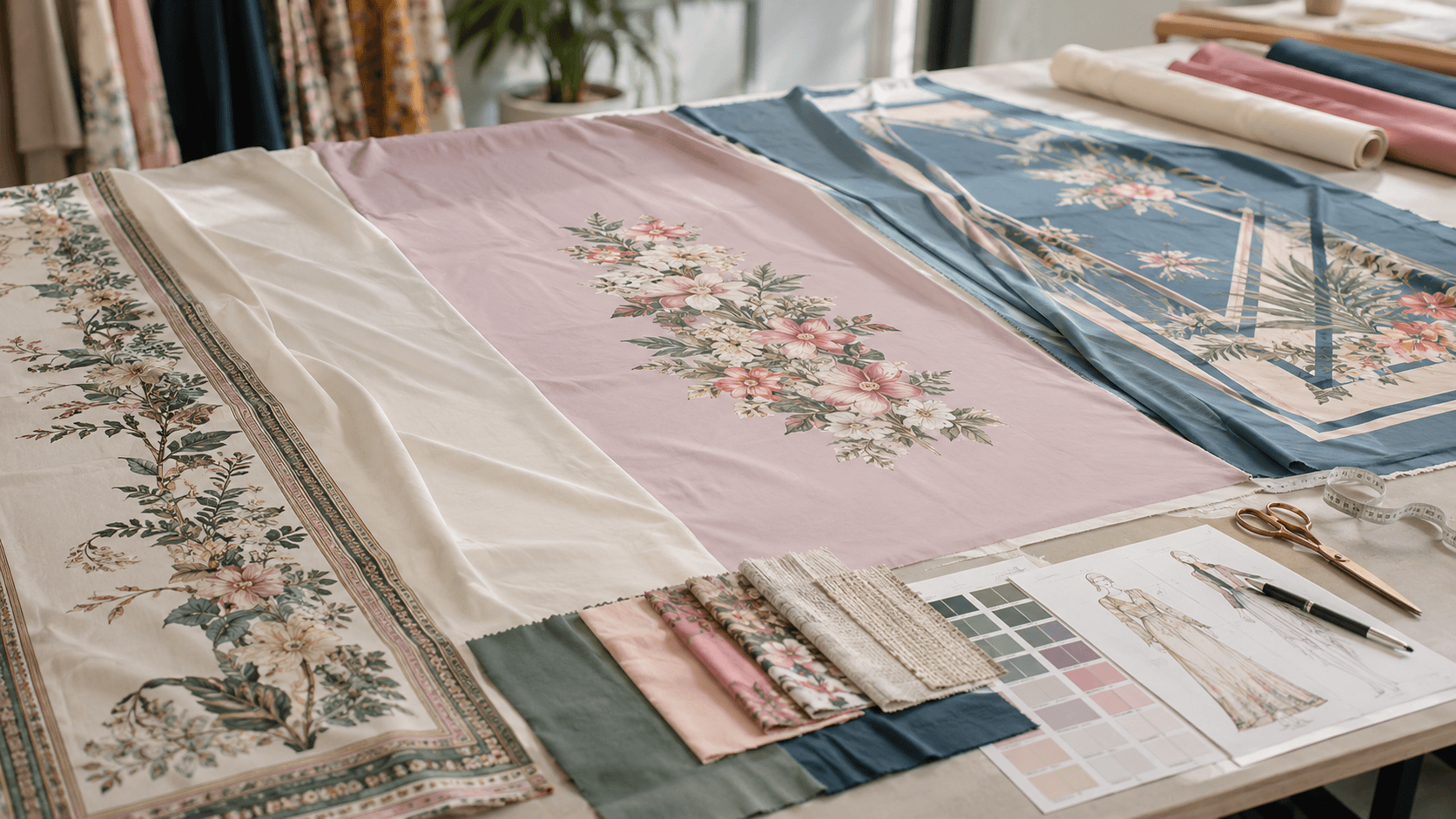
Not every printed fashion fabric needs an all-over repeat. Some designs need a border at the hem direction, a floral motif in a planned area, a scarf-style composition across the fabric width, or a large visual layout that works with the final garment design. This is where engineered print fabric becomes important.
Engineered print fabric is a printed textile where the artwork layout is planned according to fabric width, border direction, motif placement, or final garment design intention. Unlike ordinary all-over prints, engineered prints are not simply repeated evenly across the whole fabric surface. They are developed with a clear layout purpose.
This guide explains what engineered print fabric means, how it differs from all-over and placement prints, how it is developed, where it is used in fashion fabrics, and how digital position printing is making engineered print development more practical for brands and designers.
What Is Engineered Print Fabric?
Engineered print fabric refers to a printed fabric where the artwork is planned for specific visual areas rather than repeated in a simple continuous pattern. The design may be arranged around the fabric edge, a border area, a central motif, a directional layout, or a large-scale composition across the fabric width.
In fashion fabric development, engineered prints are often used when the printed surface needs to create a stronger design effect than ordinary all-over printing. For example, a dress fabric may need a border print near the hem direction, a kaftan fabric may need a central layout with side borders, or a resortwear fabric may need a scarf-style composition that looks intentional when cut and sewn.
The key idea is simple: engineered print fabric is not about printing more. It is about printing with layout control. The artwork is designed to land in a planned way on the fabric surface, giving brands more control over how the final garment or textile product will look.
Engineered Print vs All-Over Print vs Placement Print
Many buyers use the words engineered print, placement print, and all-over print interchangeably, but they are not the same. Understanding the difference helps brands choose the right printing approach during fabric development.
| Print Type | How the Artwork Is Arranged | Best For |
|---|---|---|
| All-Over Print | Artwork is repeated evenly across the fabric surface | Regular fashion prints, seasonal patterns, continuous textile designs |
| Engineered Print Fabric | Artwork is planned according to fabric width, border direction, motif position, or layout structure | Dresses, kaftans, resortwear, scarf-style layouts, border print fabrics |
| Placement Print | Artwork appears in a specific planned area of the fabric | Placed motifs, decorative focal points, border elements, visual accents |
| Digital Position Printing | Digital printing and positioning control are used to support planned artwork placement | Custom engineered print fabric development and special print layouts |
In practice, engineered print fabric often overlaps with placement print and digital position printing. The difference is that engineered print describes the design logic, while digital position printing projects describe the production method used to make that planned layout more controllable.
Why Engineered Print Fabric Is Becoming More Important
Fashion brands are looking for more distinctive printed fabrics. Ordinary repeat prints are still useful, but many collections now need stronger visual identity, more controlled artwork placement, and faster development cycles. Engineered print fabric answers this need by giving designers more control over how prints appear on the fabric.
This trend is also connected to the wider growth of digital textile printing. According to Grand View Research, the global digital textile printing market was estimated at USD 5.8 billion in 2024 and is projected to reach USD 11.6 billion by 2030. Digital printing supports custom design, flexible artwork development, and shorter sampling cycles, which makes engineered print development more practical than traditional screen-based workflows in many situations.
For fashion brands, the value is clear. A print can be designed for a specific fabric width. A border can be planned. A motif can be placed. A collection can test multiple layouts without depending on one fixed repeat pattern. This makes engineered print fabric especially useful for brands that need custom textile surfaces without committing immediately to large-scale production.
How Engineered Print Fabric Is Developed
Developing engineered print fabric is different from uploading a repeat pattern and printing it across the fabric. The artwork, fabric base, printing method, color performance, and final application all need to be considered together.
| Step | Process | Key Consideration |
|---|---|---|
| Artwork Planning | The layout is designed according to fabric width, border direction, motif position, or final visual effect | Scale, placement, repeat logic, layout direction |
| Fabric Selection | A suitable base fabric is selected before printing | Fiber content, fabric width, hand feel, shrinkage, surface texture |
| Printing Method Selection | Reactive, disperse, pigment, or acid printing is matched to the fabric base | Ink chemistry, color performance, wash fastness, fabric compatibility |
| Sample Printing | A sample is printed to check color, layout, and placement effect | Artwork adjustment before bulk production |
| Fixing and Finishing | The printed fabric is fixed, washed, dried, or finished according to the ink and fabric system | Color fastness, fabric hand feel, stability |
| Quality Checking | The fabric is checked for print position, color consistency, defects, and finishing quality | Bulk production consistency |
The choice of ink system is especially important. Industry resources such as Cibitex and Alubest commonly distinguish between reactive, disperse, pigment, acid, and sublimation ink systems for different fibers and printing requirements. For custom fashion fabric development, this means engineered print planning must begin with both design and material selection.
Main Applications of Engineered Print Fabric
Engineered print fabric is most valuable when the printed layout affects the final fashion product. Instead of covering the whole fabric with a repeated design, engineered prints help create visual structure.
Border print dress fabrics are one of the most common applications. The artwork may be planned near the hem direction, along the fabric edge, or across a specific width area to create a stronger garment effect.
Kaftan and resortwear fabrics often use large-scale motifs, borders, and central layouts. Engineered print fabric allows these elements to be arranged with a more intentional visual composition.
Scarf-style layouts use fabric-wide compositions that may include borders, center motifs, and directional artwork. These prints often need more planning than ordinary repeat designs.
Placed floral fabrics use motifs in selected areas rather than repeating them evenly across the whole surface. This can create a more elegant and premium look for dresses, skirts, blouses, and occasionwear.
Printed lace, mesh, jacquard, or textured fabrics are also becoming more interesting as digital position printing develops. Position printing machine suppliers such as HPRT describe visual positioning technology as useful for printing on embroidery, jacquard, lace, and other complex fabric surfaces. This reflects an important trend: engineered print is moving beyond flat base fabrics into more specialized fashion textiles.
Engineered Print Fabric and Vision-Guided Digital Printing
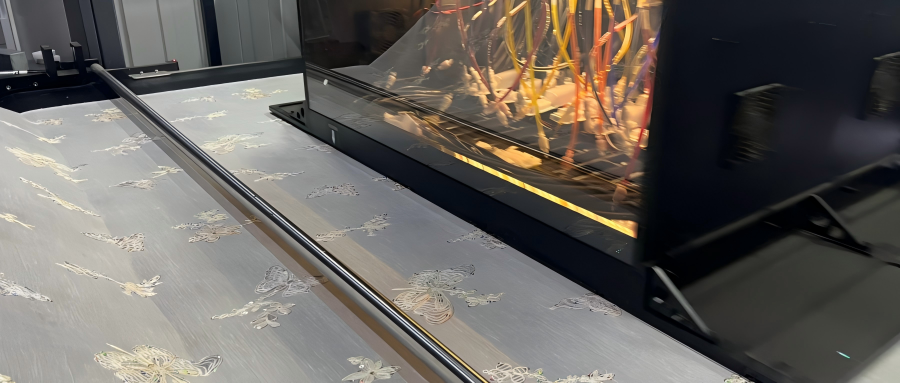
Engineered print fabric can be developed through careful artwork planning and digital printing, but vision-guided digital position printing makes more complex layouts easier to control. A vision system can help recognize fabric position, texture, pattern direction, or visual reference points before printing.
This concept is connected to the wider use of vision systems in fabric and textile applications, where high-speed cameras and algorithms are used for measurement, inspection, and production control. In digital position printing, visual recognition supports artwork alignment and placement control.
For fashion fabric development, this is useful when printing borders, placed motifs, directional layouts, or complex surface fabrics. For example, engineered prints can be developed on standard woven fabrics, but they can also be explored with embroidered fabric projects or jacquard woven fabric when the design requires a combined textile surface.
At Zenithfabrics, this connects with our digital direct printing capability and digital position printing project development. The value is not only printing an artwork, but matching the artwork layout with the fabric base, print method, color effect, and final fashion application.
What Buyers Should Prepare Before Developing Engineered Print Fabric
To develop engineered print fabric successfully, buyers should prepare more than a simple pattern file. The more complete the development information is, the easier it is to create accurate samples and avoid unnecessary revisions.
Common Mistakes in Engineered Print Fabric Development
The most common mistake is treating engineered print artwork like a normal all-over repeat. A beautiful print file may not work as an engineered fabric layout if the scale, width, border direction, and motif position are not planned correctly.
Another mistake is ignoring fabric shrinkage or surface behavior. Different fabrics react differently during pretreatment, printing, fixing, washing, and finishing. A layout that looks correct on screen may need adjustment after sample printing.
Buyers also need to avoid placing key motifs too close to cutting, sewing, or folding areas unless those areas are planned carefully. Even when the print is developed at fabric level rather than garment-piece level, the final garment application should still influence the artwork layout.
Finally, choosing the wrong printing method can affect color, hand feel, and fastness. Reactive, disperse, pigment, and acid printing systems are not interchangeable. Each one has different fabric compatibility and finishing requirements.
FAQ: Engineered Print Fabric
What is the difference between engineered print and all-over print?
All-over print repeats artwork evenly across the fabric surface. Engineered print fabric uses a planned layout, such as borders, placed motifs, center compositions, or directional artwork.
Is engineered print fabric the same as placement print?
They are related, but not always identical. Placement print usually refers to artwork placed in a specific area, while engineered print fabric may include a more complete layout across the fabric width or design direction.
Can engineered print fabric be made with digital printing?
Yes. Digital textile printing is commonly used for engineered prints because it supports flexible artwork development, color variation, sampling, and custom layouts.
What fabrics are suitable for engineered print?
Engineered print fabric can be developed on cotton, viscose, polyester, silk, nylon, blends, satin, chiffon, mesh, and other fashion fabrics, depending on the selected printing method.
Can engineered print be used on embroidered or jacquard fabrics?
Yes, but these projects require more careful testing. Vision-guided digital position printing can support more complex surfaces such as embroidery, jacquard, lace, and textured fabrics.
Does engineered print fabric require sample development before bulk production?
Yes. Sampling is important because the artwork layout, fabric base, color, hand feel, shrinkage, and finishing effect must be checked before bulk production.
Conclusion
Engineered print fabric gives fashion brands more control over where artwork appears on the fabric. Instead of relying only on ordinary all-over repeats, designers can create border prints, placed motifs, scarf-style layouts, directional compositions, and custom visual structures for different fashion applications.
As digital textile printing and vision-guided position printing continue to develop, engineered prints are becoming more practical for custom fashion fabric projects. For brands that want more distinctive printed textiles, the opportunity is not only to choose a pattern, but to plan how the printed layout works with the fabric, the garment, and the final collection.
about
Zenithfabrics
Based in Keqiao, Shaoxing — the heart of China's textile industry — Zenithfabrics specializes in high-quality embroidered mesh, embroidery lace, and custom decorative fabrics.