Why Vision-Guided Digital Position Printing Is Reshaping Fashion Fabric Development
Digital textile printing is becoming a more important part of modern fashion fabric development. According to Grand View Research, the global digital textile printing market was estimated at USD 5.8 billion in 2024 and is projected to reach USD 11.6 billion by 2030. Behind this growth is a clear industry direction: brands want faster sampling, more flexible artwork development, smaller production runs, and more customized fabric surfaces.
Within this shift, vision-guided digital position printing is becoming especially relevant. Ordinary digital printing solves the problem of color and pattern flexibility. Position printing goes further by addressing a more specific question: where exactly should the artwork appear on the fabric?
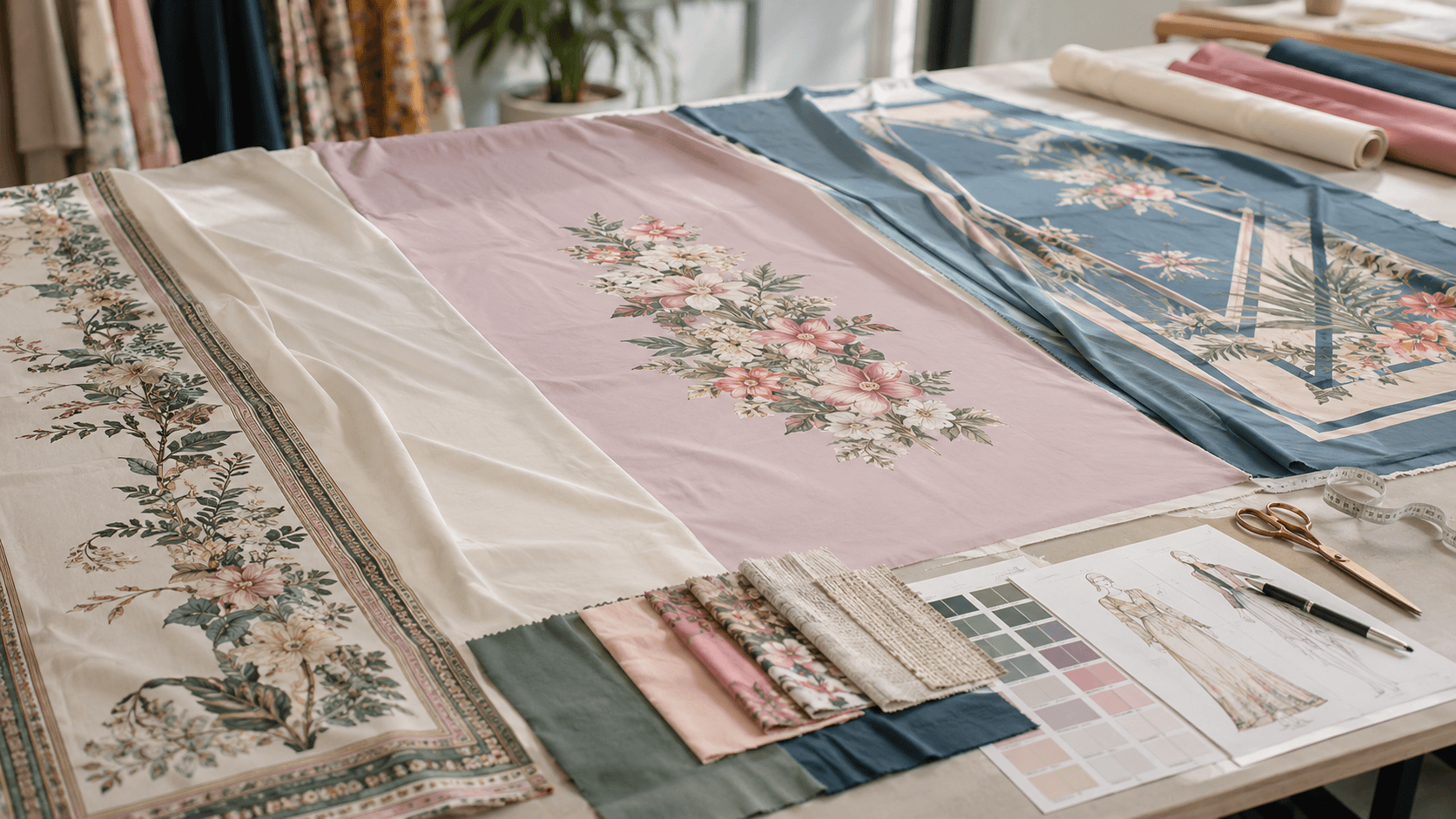
For fashion fabrics, this matters. Border prints, placed motifs, engineered layouts, scarf-style compositions, kaftan fabrics, resortwear prints, and directional artwork all require more than a repeated all-over pattern. They require planned placement. Vision-guided digital position printing allows the printing process to move closer to the designer’s layout intention.
From Printing a Pattern to Controlling a Layout
Traditional fabric printing is often built around repeat patterns. A design is repeated across the fabric width and length, creating a continuous printed surface. This is still useful for many fashion fabrics, but it does not fully answer the needs of more engineered fabric designs.
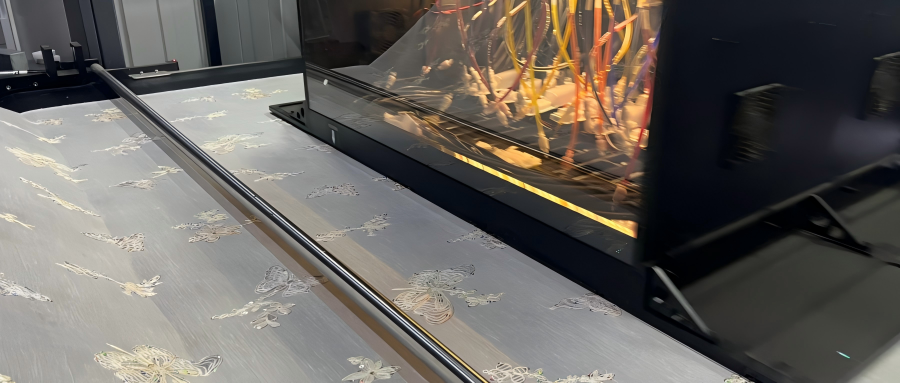
Vision-guided digital position printing changes the logic. The printing system uses camera-based visual recognition to help identify fabric position, texture, pattern direction, or registration points before printing. In simple terms, the printer does not only “print the artwork”; it first reads the fabric surface and then prints with a more controlled alignment strategy.
This idea connects with the wider use of vision systems in the fabric and textile industry, where high-speed cameras and image-processing tools are used for measurement, inspection, defect detection, and quality control. In digital position printing, similar visual logic is applied to artwork placement and fabric alignment.
Why the Industry Is Moving Toward Vision-Guided Printing
The rise of vision-guided position printing is not only a machine upgrade. It reflects several broader changes in fashion fabric sourcing and textile development.
Four Advantages That Matter for Fabric Buyers
| Industry Advantage | What It Means | Value for Fashion Fabric Development |
|---|---|---|
| Visual alignment control | Camera recognition helps align artwork with planned fabric areas | Better for border prints, placed motifs, and directional layouts |
| Complex surface compatibility | Position printing can support textured or visually complex fabrics | Useful for jacquard, embroidery, lace, sequins, and specialty surfaces |
| Faster design development | Digital workflow reduces dependence on traditional screen preparation | Supports sampling, artwork testing, and seasonal design updates |
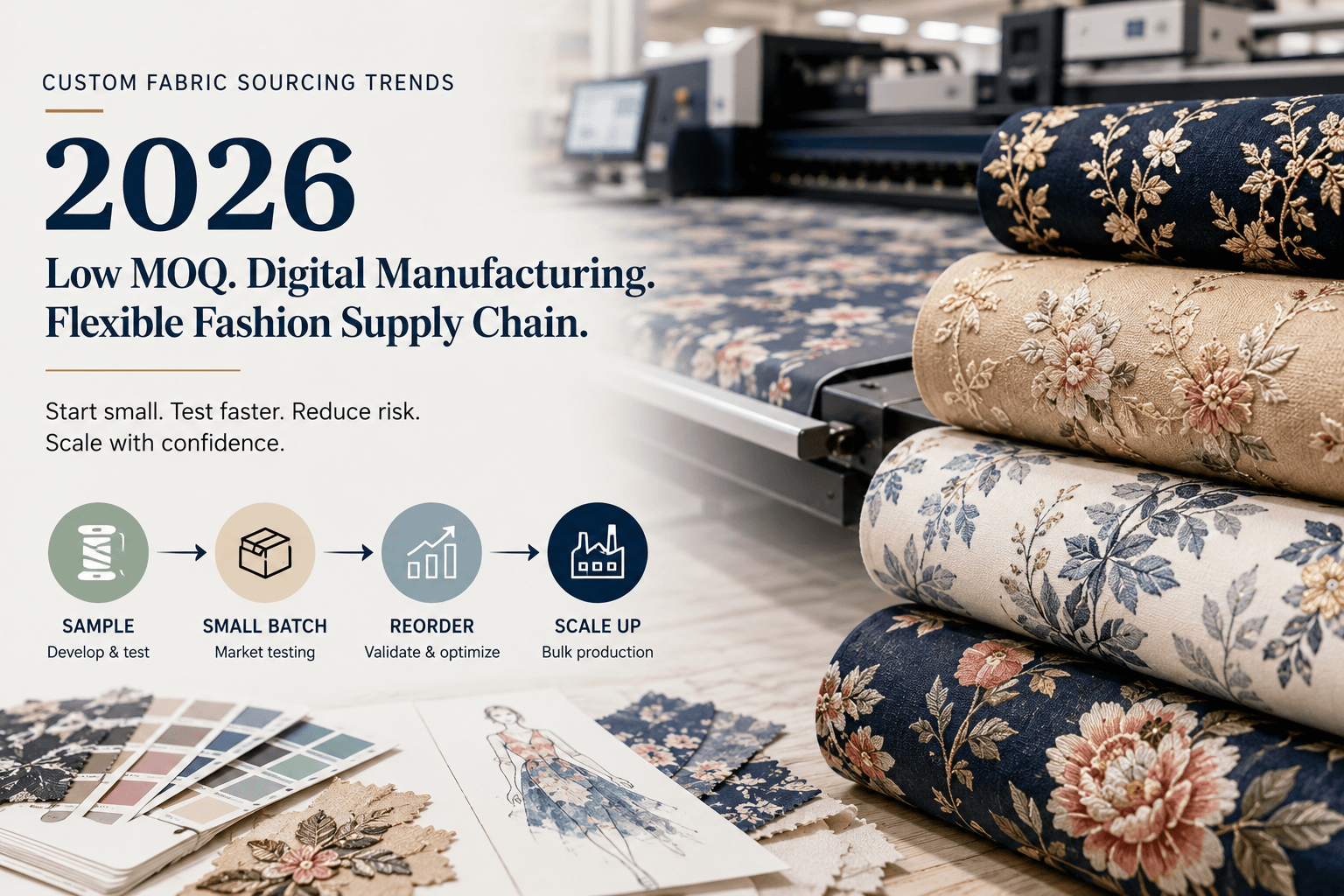
| More flexible production strategy | Digital printing supports smaller batches and customized layouts | Helps brands test new fabric concepts before scaling production |
Position printing machine suppliers are also pushing this direction. For example, HPRT describes its visual positioning digital textile printer as suitable for jacquard, embroidery, sequins, lace, and silk fabrics. This reflects a broader industry need: printing is moving from simple surface decoration toward more controlled textile development on difficult fabric bases.
Applications: Where Vision-Guided Position Printing Creates Value
The most natural applications for vision-guided digital position printing are fashion fabrics where artwork placement directly affects the finished appearance.
Border print fabrics are one of the clearest examples. The printed artwork may need to follow the fabric edge, garment hem direction, or a planned decorative area. A standard repeat print may not create the same visual structure.
Placed floral fabrics also benefit from position control. Instead of repeating flowers evenly across the whole surface, the design can be arranged with intentional spacing, direction, and visual focus.
Scarf-style and kaftan fabrics often use large-scale layouts, borders, center motifs, or directional compositions. These designs require fabric-level planning rather than simple pattern repetition.
Complex surface fabrics are another important direction. When printing on or around jacquard textures, embroidered surfaces, lace structures, or sequin effects, visual positioning can help make the printing process more practical for specialty fabric development.
For Zenithfabrics, these applications connect directly with our digital position printing projects, where artwork placement, fabric base, print method, and final fashion application need to be developed together.
A Trend Connected to Digital Textile Printing Growth
The growth of digital textile printing provides the larger context for position printing. Digital textile printing is expanding because it fits today’s fashion supply chain: more designs, shorter lead times, smaller production batches, and stronger demand for customization.
Vision-guided position printing builds on these strengths. It keeps the flexibility of digital printing while adding a higher level of layout control. This makes it especially useful for fashion brands that want more than all-over prints but do not want to rely only on traditional screen-based workflows.
The trend is not about replacing every printing method. It is about giving fabric developers another tool. Ordinary all-over printing remains suitable for many repeated patterns. Jacquard woven fabric remains strong when the pattern needs to be built into the fabric structure. Embroidered fabric projects remain valuable when raised texture and decorative stitching are required. Vision-guided digital position printing occupies a different space: controlled artwork placement on fabric.
Sustainability: A More Careful Way to Understand the Advantage
Digital textile printing is often discussed as a more flexible and potentially lower-waste alternative to traditional printing, but the sustainability advantage should be stated carefully. Results depend on fabric type, ink system, pretreatment, post-treatment, energy source, print volume, and finishing process.
Still, the direction is important. Digital textile printing can reduce the need for screen making and support more on-demand production. Research and industry analysis also suggest that digital textile printing can be favorable to rotary-screen printing under certain production conditions. For example, a 2024 study comparing rotary-screen and digital textile printing found digital textile printing favorable in its research context, while Carbonfact’s analysis also discusses how digital printing can reduce certain environmental impacts compared with more resource-intensive dyeing or traditional processes.
For fabric buyers, the practical point is this: vision-guided position printing can support more precise development and reduce unnecessary sampling waste when artwork placement and fabric choice are properly prepared.
What Still Needs to Be Controlled
Vision-guided position printing is not a shortcut that removes the need for fabric development. It makes certain projects more controllable, but the final result still depends on preparation.
Artwork must be developed with placement logic. Fabric width, shrinkage, texture, stretch, and stability need to be considered. Color performance depends on the fabric base and the printing method. Sampling is still necessary before bulk production, especially for border prints, placed motifs, and complex surface fabrics.
This is why the strongest suppliers are not simply printing factories. They are becoming fabric development partners. The real value lies in matching artwork, fabric base, ink system, visual placement, color adjustment, finishing requirements, and final fashion application.
How Zenithfabrics Fits into This Industry Direction
As a custom fabric manufacturer based in China’s textile supply chain, Zenithfabrics follows this shift from simple printing to project-based fabric development. Our digital direct printing capability supports fashion fabric projects that require artwork review, fabric matching, print method selection, color adjustment, and sample development.
For buyers developing modern fashion fabrics, vision-guided digital position printing creates more possibilities: borders can be planned, motifs can be placed, layouts can be engineered, and printing methods can be matched to different fabric bases. This is why the technology is becoming more than a machine feature. It is becoming part of how fashion fabric development is changing.
about
Zenithfabrics
Based in Keqiao, Shaoxing — the heart of China's textile industry — Zenithfabrics specializes in high-quality embroidered mesh, embroidery lace, and custom decorative fabrics.