“`txt
Company News · Custom Fabric Development
How Zenithfabrics Handles Custom Fabric Development from Artwork to Sample
Custom fabric development often begins with a design idea, an artwork file, a reference image, or a fabric sample. At Zenithfabrics, we help fashion brands and fabric buyers turn these early ideas into practical fabric samples through artwork review, base fabric selection, technique matching, sample making, and bulk production planning.
Artwork Review
We review the buyer’s artwork, reference image, color direction, fabric requirement, target usage, and order quantity expectation before recommending a development direction.
Technique Matching
Depending on the design, we evaluate whether the project is more suitable for digital printing, custom embroidery, jacquard weaving, or mixed fabric techniques.
Sample Development
After confirming the base fabric, technique, colors, and development details, we prepare fabric samples for buyer review, adjustment, and future production planning.
Why Custom Fabric Development Needs More Than a Quotation
Custom fabric development is different from buying ready-made stock fabric. A buyer may send an artwork file, a reference image, a garment sketch, a Pantone color direction, or a fabric swatch. Before a reliable quotation or sample can be prepared, the design must be reviewed from a production point of view.
This is because a fabric idea needs to be connected with the right base fabric, the right technique, the right density, the right color direction, and the right application. A design that looks good on screen may need adjustment before it can become a stable printed fabric, embroidered fabric, jacquard fabric, or mixed-technique material.
In the broader custom textile manufacturing process, design, materials, production method, and end-use performance all need to be considered. This is why Zenithfabrics treats custom fabric development as a step-by-step project, not only as a price inquiry.
As a custom premium fabric manufacturer, Zenithfabrics works with fashion buyers who need printed, embroidered, jacquard, or mixed-technique fabrics for dresses, womenswear, bridalwear, eveningwear, resortwear, kaftans, and other apparel applications.
Development principle: A good custom fabric sample is not created by production alone. It depends on correct artwork review, suitable base fabric selection, practical technique matching, and clear communication before sampling starts.
What Buyers Usually Send Us Before Development
The more clearly a buyer provides project information, the more accurately we can evaluate the fabric development direction. The following details are commonly used during the early review stage.
Artwork File
A digital artwork file, repeat pattern, motif layout, or design sketch helps us understand the visual direction and technical difficulty.
Reference Image
A reference image helps clarify the expected style, surface effect, embroidery look, print feeling, or final garment mood.
Color Direction
Pantone numbers, fabric swatches, color cards, or previous samples help us evaluate color matching and sampling expectations.
Base Fabric Requirement
Buyers may specify mesh, tulle, organza, satin, chiffon, cotton, polyester, jacquard base, or other fabric structures.
Application
Fabric for dresses, bridalwear, eveningwear, kaftans, womenswear, or decorative panels may require different technique choices.
Quantity Expectation
Target quantity, MOQ expectation, or future reorder plan helps us recommend a practical sampling and production direction.
Our Artwork-to-Sample Development Flow
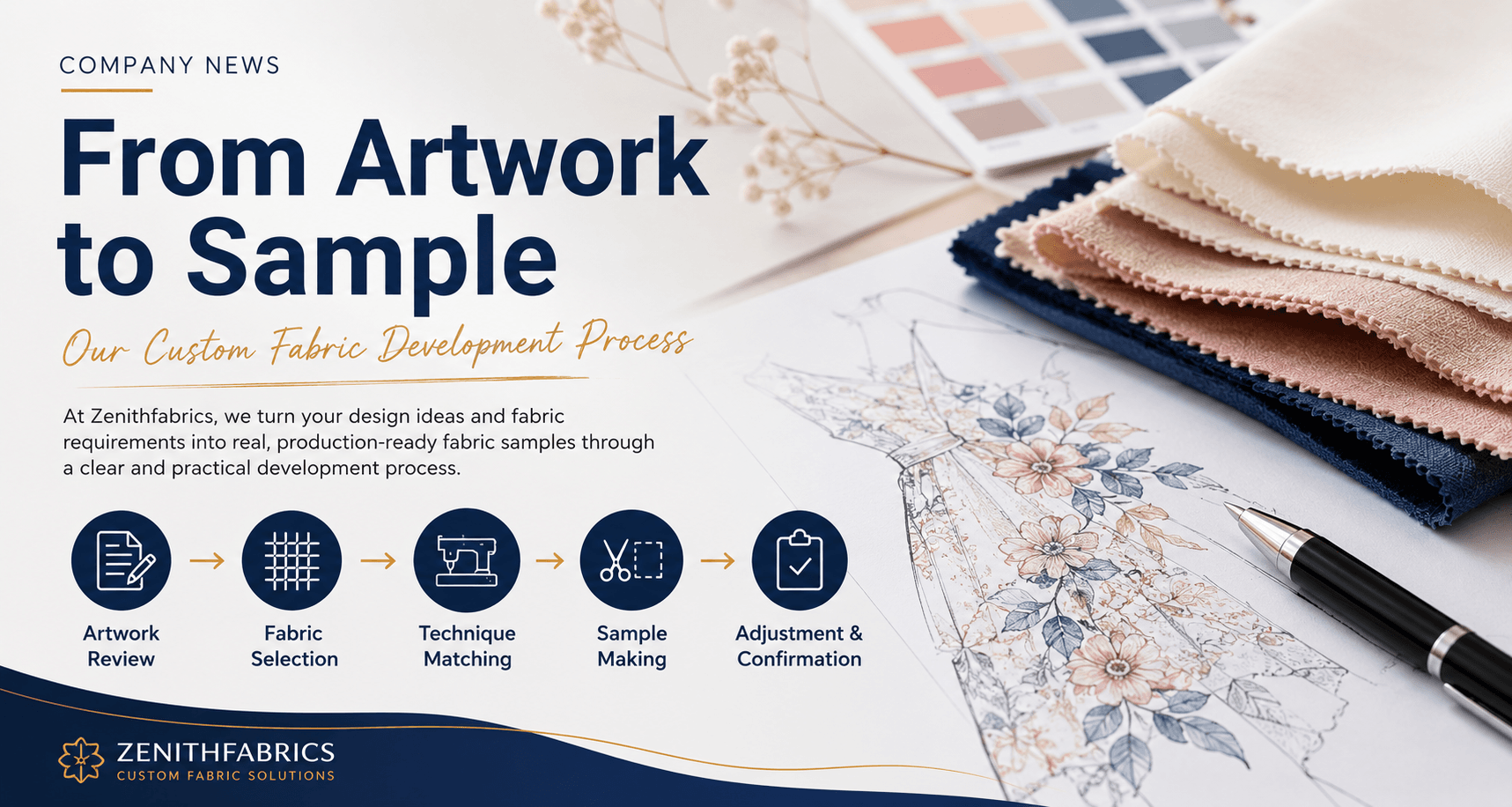
After receiving the buyer’s artwork or reference information, Zenithfabrics usually follows a clear development flow to move the project from design review to sample confirmation.
Artwork and Requirement Review
We review the artwork, reference image, fabric requirement, target application, width requirement, quantity expectation, and any special development notes from the buyer.
Base Fabric Selection
We evaluate suitable base fabrics according to hand feel, transparency, weight, structure, garment use, printing performance, embroidery stability, and finishing requirements.
Technique Matching
We decide whether the project should use digital printing, custom embroidery, jacquard weaving, or a mixed technique based on the design effect and production feasibility.
Sample Making
Once the development direction is confirmed, we prepare fabric samples so the buyer can review color, surface effect, motif scale, fabric hand feel, density, and overall appearance.
Adjustment and Confirmation
If the buyer needs changes, we review the adjustment direction, such as color correction, embroidery density, print scale, fabric base change, or finishing modification.
Bulk Feasibility Review
After sample approval, we review production quantity, delivery schedule, quality control points, packaging requirements, and repeat-order feasibility before moving toward bulk production.
How We Match Techniques to Fabric Projects
Not every custom fabric project should be produced with the same technique. A soft floral artwork may be suitable for digital printing. A luxury eveningwear design may require embroidery, sequins, beads, or raised surface effects. A structured pattern may be more suitable for jacquard weaving if the motif needs to be built into the fabric structure.
Zenithfabrics evaluates each project according to visual effect, base fabric, garment application, MOQ direction, sample cost, and production feasibility.
Digital Printing
For printed designs, color testing, all-over patterns, and flexible development, digital direct printing can help buyers move from artwork to sample more efficiently.
It is especially useful for fashion brands that need custom printed fabrics, seasonal colorways, or small-batch development before bulk production.
Custom Embroidery
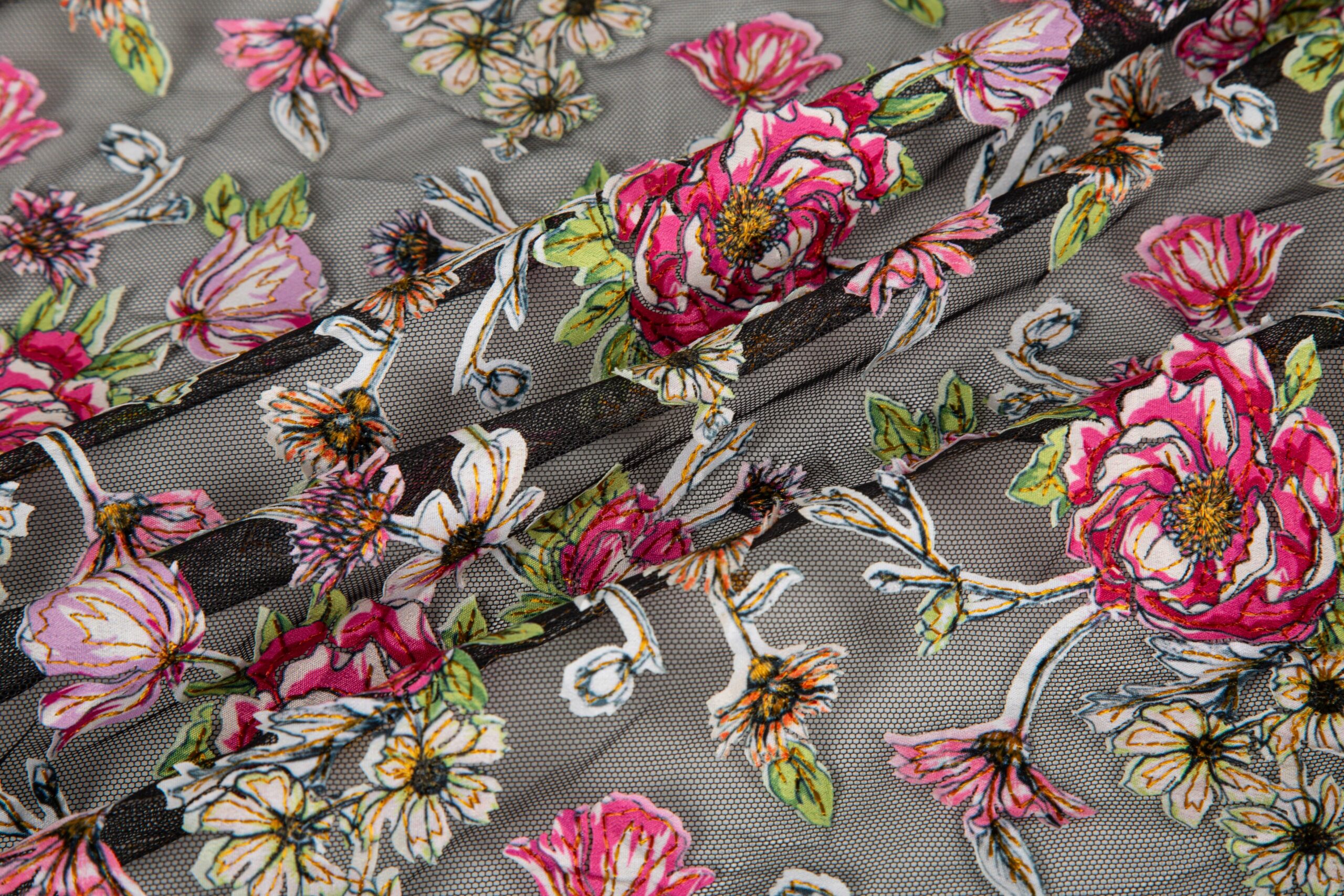
For decorative surface effects, raised details, sequins, beads, mesh embroidery, or luxury fashion fabrics, custom embroidery services allow buyers to develop more dimensional textile designs.
Embroidery development requires careful review of stitch density, base fabric stability, thread color, motif size, and final garment use.
Jacquard Weaving
For patterns that need to be woven into the fabric structure, jacquard woven fabric development can provide a more integrated textile effect than surface printing or embroidery.
Jacquard projects require attention to yarn selection, pattern structure, fabric weight, repeat size, and final garment performance.
What This Process Means for Fashion Buyers
A structured custom fabric development process helps buyers reduce uncertainty before production. Instead of moving directly from design idea to bulk order, the buyer can review a real sample, make adjustments, and confirm whether the fabric is suitable for the final collection.
Better Sample Accuracy
Clear artwork review, fabric selection, and technique matching help reduce the risk of samples that look different from the buyer’s original intention.
Clearer MOQ Direction
Different techniques and base fabrics have different MOQ requirements. Early evaluation helps buyers understand what is practical before production begins.
Less Communication Gap
By reviewing artwork, reference images, color direction, and garment use together, both sides can communicate with a clearer development target.
Smoother Sample-to-Bulk Transition
Once the sample is approved, the project can move into production planning with clearer quality standards, quantity expectations, and delivery requirements.
Send Your Artwork or Fabric Reference to Zenithfabrics
If you are developing a new printed, embroidered, jacquard, or mixed-technique fashion fabric, Zenithfabrics can help review your artwork, evaluate suitable fabric bases, recommend production techniques, and prepare samples for your collection development.
You can send us your artwork file, reference image, Pantone color direction, fabric requirement, and target application. Our team will review the project and help you move from design idea to practical fabric sample.
about
Zenithfabrics
Based in Keqiao, Shaoxing — the heart of China's textile industry — Zenithfabrics specializes in high-quality embroidered mesh, embroidery lace, and custom decorative fabrics.