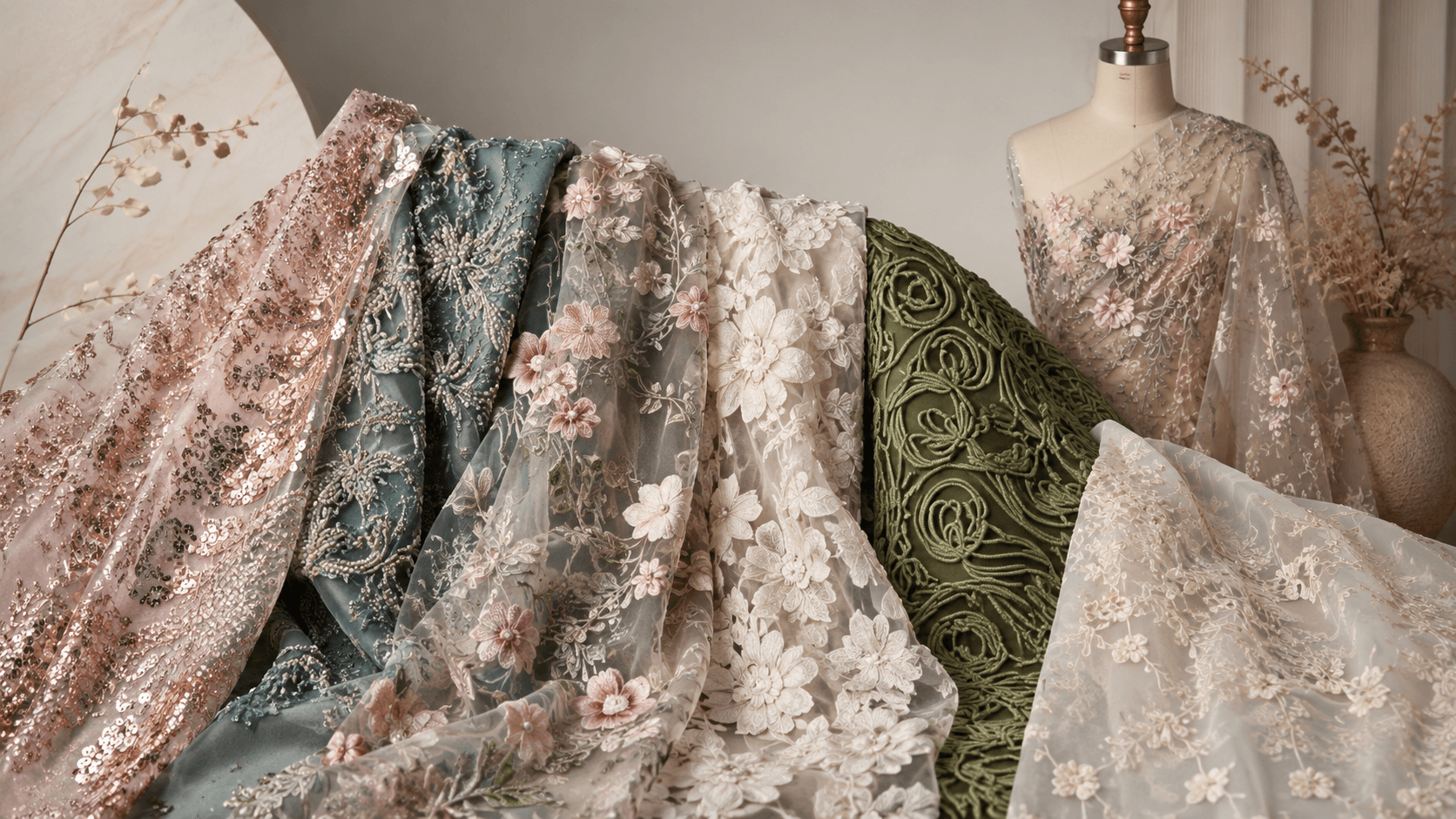
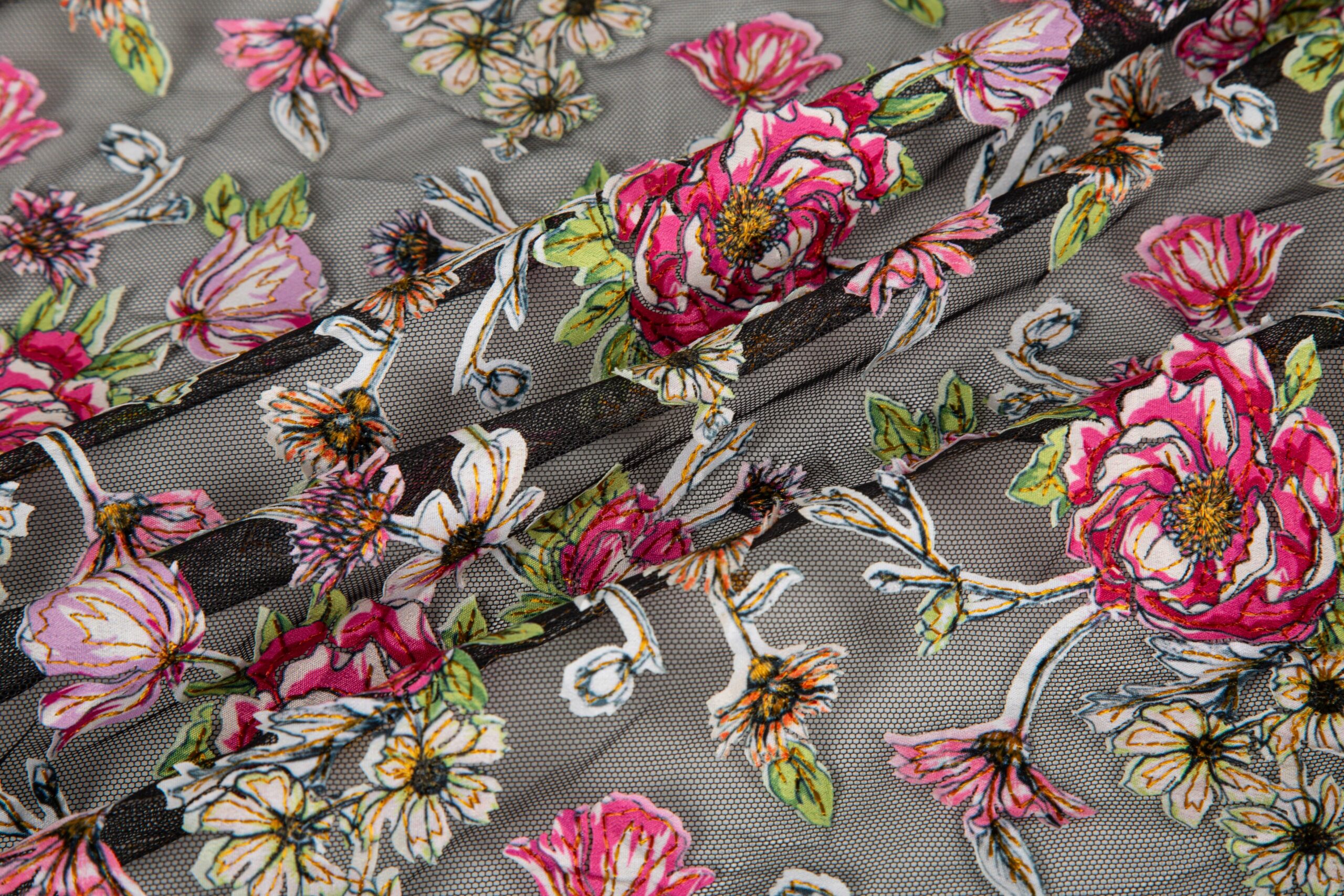
Applique embroidery fabric is a decorative textile created by applying cut fabric pieces onto a base fabric and securing them with embroidery stitching. This process is based on the appliqué technique, where additional fabric shapes are attached to a base material to create decorative surface effects. Unlike conventional embroidery, which relies mainly on thread to build patterns, applique embroidery combines fabric layering with stitched details to create richer texture, stronger color contrast, and more dimensional surface effects.
For fashion garments, applique embroidery is especially valuable because it allows designers to work with different materials within one fabric design. Lace, organza, mesh, satin, printed fabric, and embroidered pieces can all be used as applique elements, creating fabrics with a more expressive and customized appearance.
This technique is widely used in dresses, bridalwear, evening gowns, blouses, skirts, occasionwear, and custom fashion collections where layered decoration and distinctive surface design are important.
What Is Applique Embroidery Fabric?
Applique embroidery fabric refers to a decorative fabric that uses appliqué pieces as part of the embroidery design. These pieces are usually cut from another fabric and stitched onto the base material with embroidery stitches around the edges or across the surface.
In simple terms, applique embroidery is a combination of fabric applique and embroidery. The applique pieces provide shape, color, texture, and volume, while the embroidery stitches secure the pieces and add decorative finishing.
For example, a floral applique embroidery fabric may use lace flower motifs, organza fabric petals, printed fabric shapes, or embroidered patches applied onto a mesh or tulle base. The edges can then be finished with satin stitches, zigzag stitches, thread embroidery, cord stitching, sequins, or beads.
The result is a fabric with layered motifs and a more dimensional appearance than flat embroidery alone. This makes applique embroidery suitable for fashion designs that need bold decorative elements, soft textile layering, and a handcrafted visual effect.
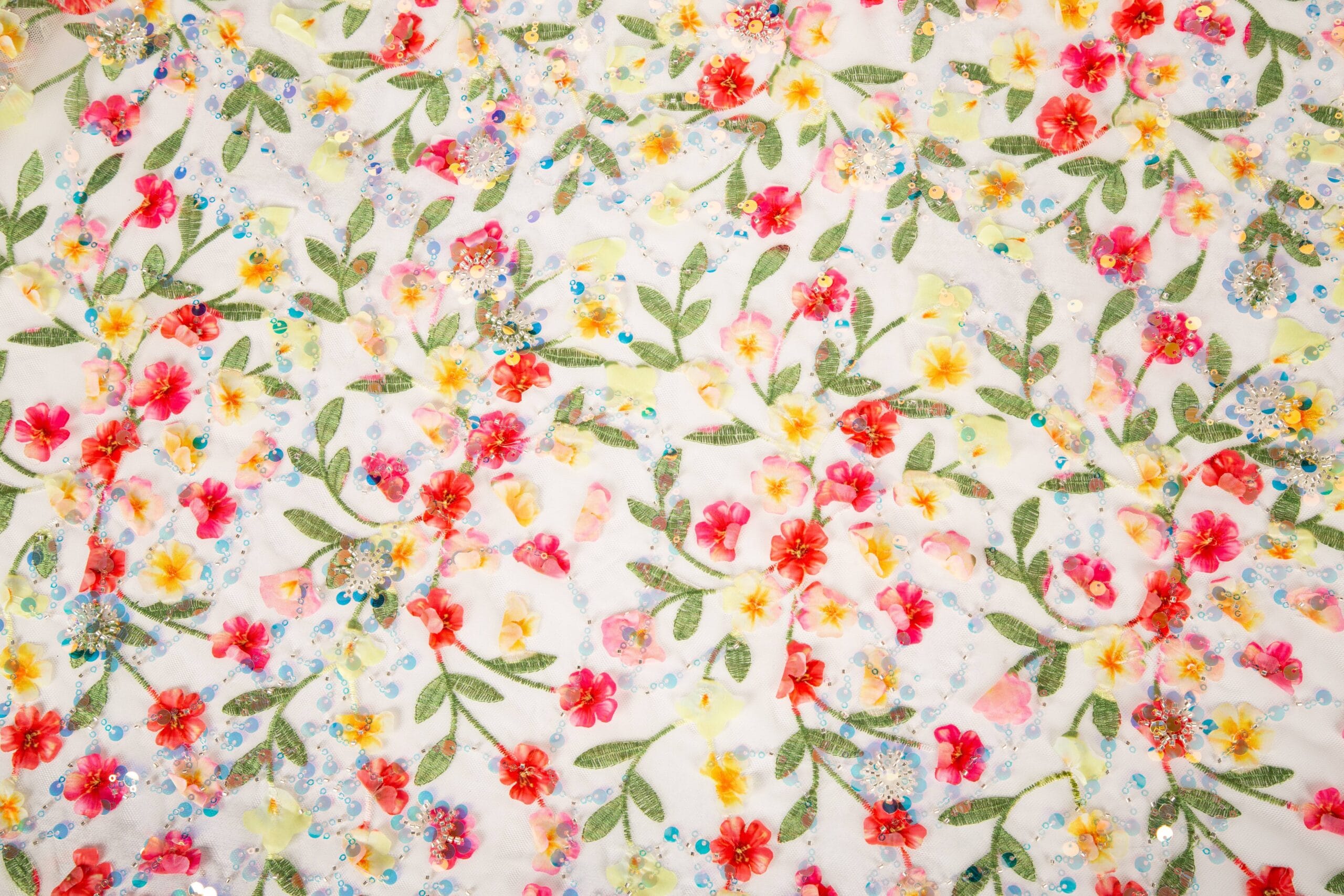
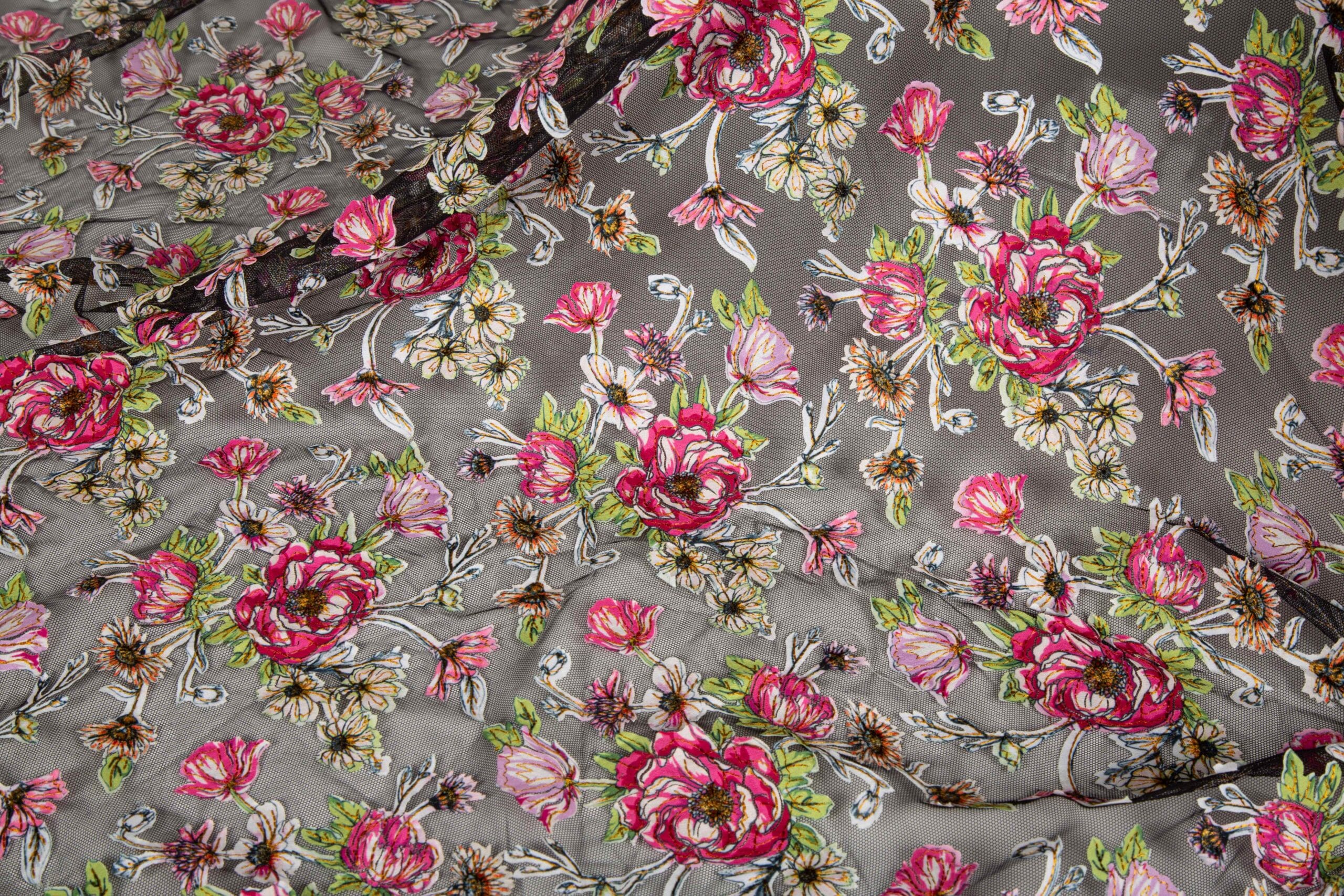
How Applique Embroidery Creates Layered Fabric Effects
The main visual strength of applique embroidery fabric comes from its layered construction. By placing one fabric material over another, designers can create decorative effects that are difficult to achieve through thread embroidery alone.
Applique pieces can be sheer, opaque, soft, shiny, textured, printed, or embroidered before being attached to the base fabric. This gives the final fabric more flexibility in color, texture, and pattern development.
Common applique effects include:
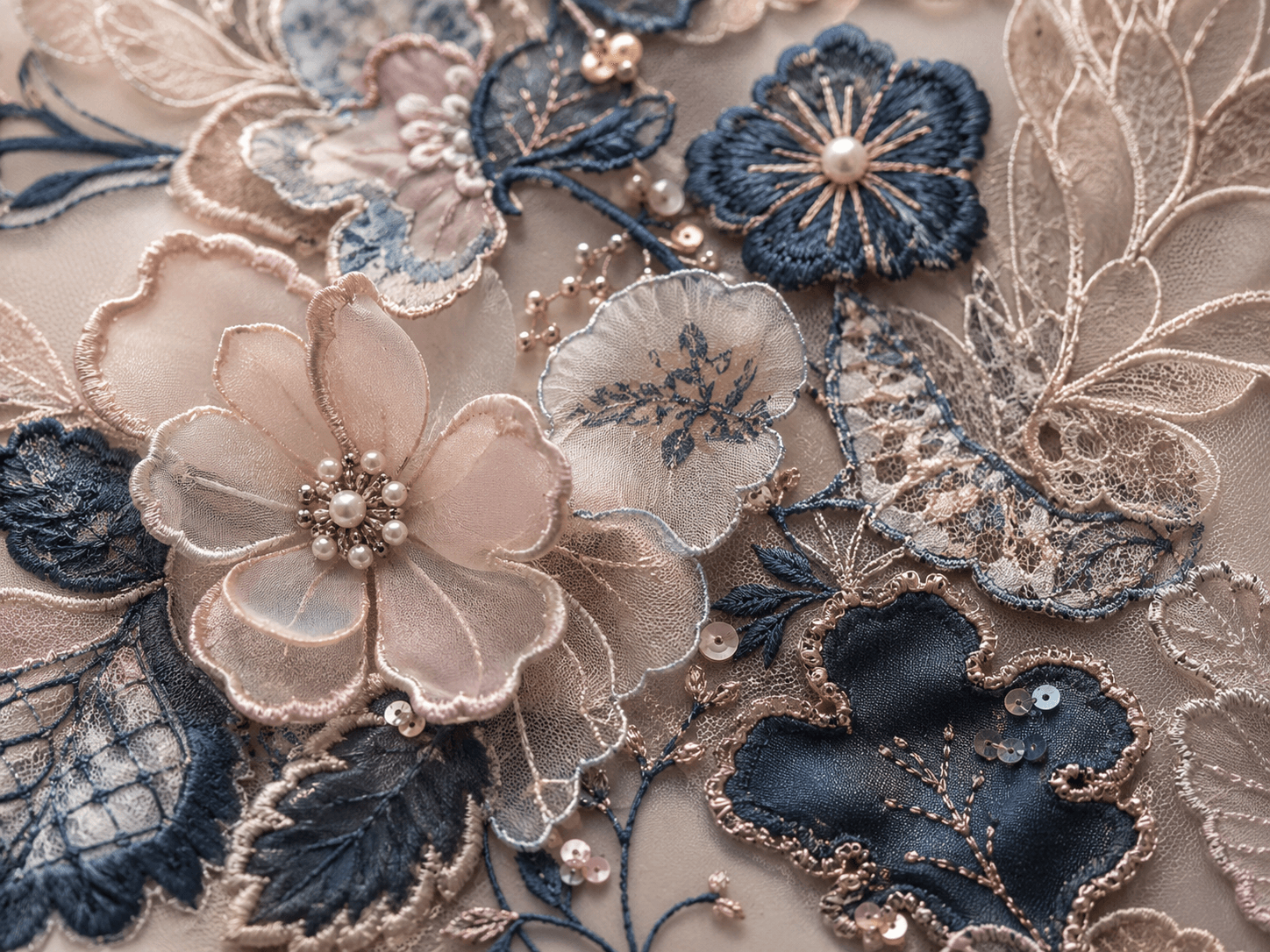
This layered structure makes applique embroidery especially useful for fashion garments that require visual impact without relying only on dense thread coverage. It can create larger motifs, softer surfaces, and more expressive fabric designs while maintaining flexibility for garment production.
Common Materials Used in Applique Embroidery Fabric
Different applique embroidery techniques can be used depending on the design direction, base fabric, applique material, and garment application. In fashion fabric development, the technique is usually selected according to the desired visual effect and production requirements.
| Fabric Type | Best For | Visual Effect |
|---|---|---|
| Tulle / Mesh | Bridalwear, dresses, sheer fashion fabrics | Lightweight, transparent, delicate |
| Organza | Floral applique, couture details, bridal fabrics | Soft structure, dimensional petals, sheer layering |
| Lace | Wedding gowns, romantic fashion, eveningwear | Refined, elegant, decorative |
| Satin | Formal dresses, occasionwear, luxury garments | Smooth, shiny, strong color contrast |
| Printed Fabric | Fashion collections, artistic designs | Distinctive patterns and customized visual identity |
| Embroidered Fabric Pieces | Premium decorative fabrics | Layered texture and complex embellishment |
| Sequin Fabric | Eveningwear and statement garments | Sparkle, shine, decorative impact |
For machine embroidery applique fabric, the base fabric must be stable enough to hold stitching without distortion. Lightweight materials such as tulle and mesh often require careful handling, proper backing, and accurate machine settings to maintain clean edges and consistent embroidery quality.
In commercial fabric production, material selection should also consider garment weight, drape, transparency, wash performance, and bulk production consistency. A fabric that looks attractive in a sample must also remain stable during cutting, sewing, finishing, and garment assembly.
Applique Embroidery vs Traditional Embroidery
Applique embroidery and traditional embroidery are closely related, but they are not the same.
Traditional embroidery creates patterns mainly through thread stitching. The design is built by placing stitches directly onto the base fabric. This method is effective for detailed lines, small motifs, logos, decorative outlines, and dense thread effects.
Applique embroidery uses additional fabric pieces as part of the design. These pieces are attached to the base fabric with embroidery stitching. As a result, applique embroidery can create larger motifs, stronger color areas, richer material contrast, and more dimensional surface effects.
In fashion fabric development, applique embroidery is often selected when the design requires:
Traditional embroidery is usually better for fine thread details and precise stitched patterns. Applique embroidery is better when the designer wants to introduce fabric layering, soft volume, and a stronger textile surface effect.
For many fashion fabrics, both techniques can be combined. Applique pieces can form the main motif, while embroidery stitching, sequins, beads, or cords add definition and decorative finishing.
Applications of Applique Embroidery Fabric in Fashion
Applique embroidery fabric can be used across many fashion categories, especially where decorative surface design plays an important role. Its layered structure gives garments a more distinctive and customized appearance.
| Application | Why It Works |
|---|---|
| Dresses | Adds decorative motifs, color layering, and dimensional details |
| Bridalwear | Creates romantic floral effects and delicate surface textures |
| Evening Gowns | Provides visual impact, luxury detail, and mixed embellishment potential |
| Blouses and Tops | Adds refined decorative accents without excessive weight |
| Skirts | Creates allover motifs or border-style design effects |
| Occasionwear | Enhances premium appearance for special-event garments |
| Couture Fashion | Supports unique, artistic, and highly customized fabric developments |
For bridalwear, applique embroidery is often used to create floral motifs on tulle, mesh, or lace bases. These fabrics can add romance, softness, and dimensional detail to wedding gowns, veils, overskirts, and decorative bodices.
For eveningwear, applique embroidery can be combined with sequins, beads, metallic threads, or cord embroidery to create stronger decorative effects. This is useful for gowns and occasion dresses that need light reflection, movement, and visual richness.
For fashion collections, applique embroidery offers more creative freedom. Designers can use contrast-color fabric pieces, printed applique elements, or mixed materials to create unique textile designs that are difficult to achieve with standard embroidery alone.
Custom Applique Embroidery Fabric for Brands and Wholesalers
For fashion brands, garment manufacturers, and fabric wholesalers, custom applique embroidery fabric can be developed according to artwork, base fabric, applique material, motif size, color direction, and production quantity.
A custom applique embroidery fabric project usually involves several key decisions:
- Base fabric selection
- Applique material selection
- Motif size and placement
- Edge stitching method
- Color combination
- Additional embellishments such as sequins, beads, cords, or metallic threads
- Sampling and bulk production requirements
Compared with ready-made fabrics, custom applique embroidery allows brands to create more distinctive textile designs that match a specific collection, market, or garment style. It is especially useful for brands that need exclusive embroidery patterns, customized colorways, or special decorative effects.
For wholesale fabric buyers, applique embroidery fabric can also be developed in repeatable patterns suitable for bulk orders. Once the design, material, and embroidery specifications are confirmed, production can be adjusted for consistent quality across larger quantities.
Custom Fabric Development
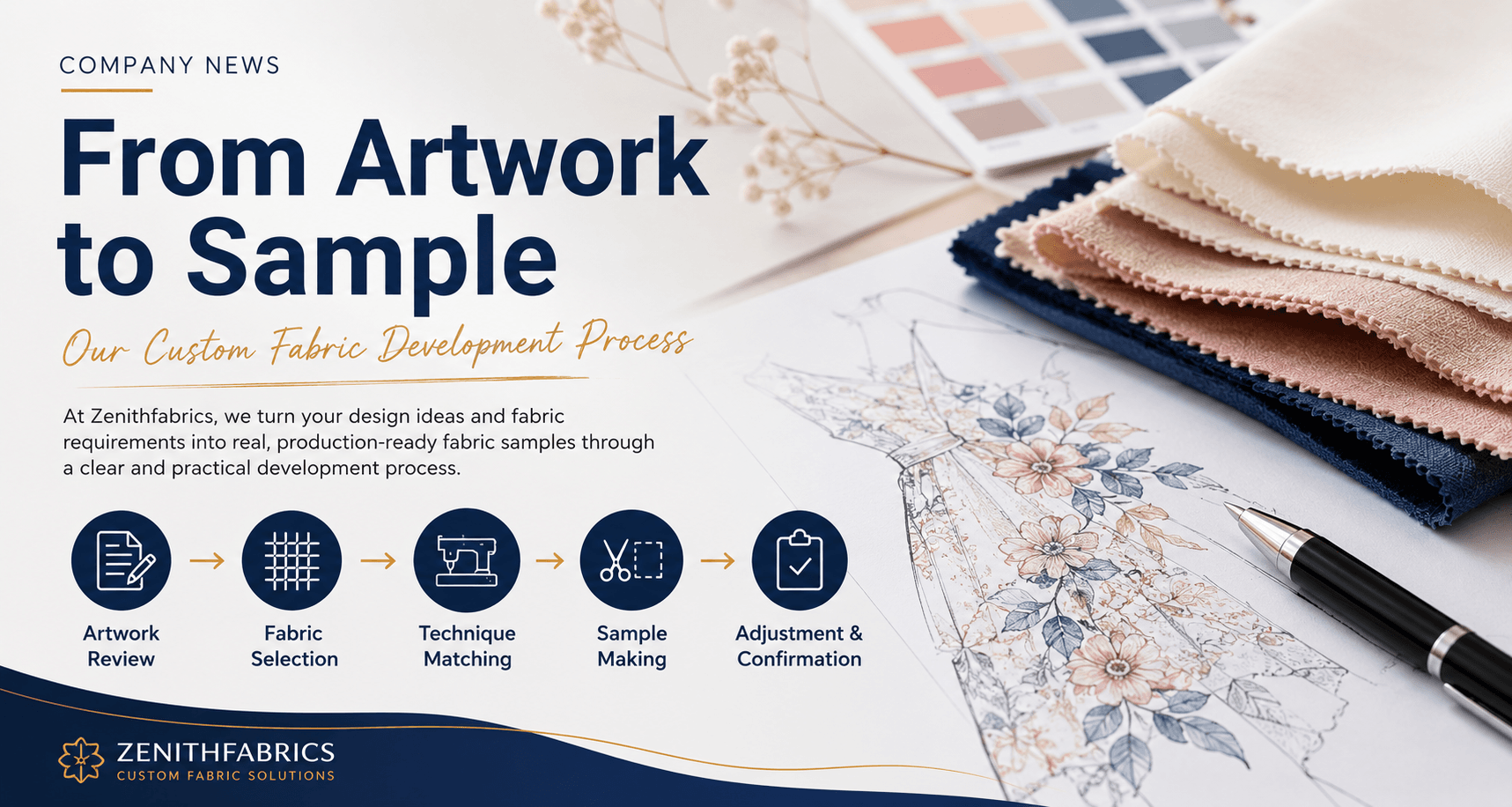
Support for artwork review, material selection, sampling, and custom applique embroidery development.
Bulk Production Support
Consistent embroidery production for fashion brands, garment manufacturers, and fabric wholesalers.
Custom Applique Embroidery Fabric Development
As part of our custom embroidery services, Zenithfabrics develops custom applique embroidery fabric for fashion brands, wholesalers, and garment manufacturers, supporting design development, sampling, and bulk embroidery production for global apparel markets.
about
Zenithfabrics
Based in Keqiao, Shaoxing — the heart of China's textile industry — Zenithfabrics specializes in high-quality embroidered mesh, embroidery lace, and custom decorative fabrics.