Embroidery Fabric Market Trends and Applications in Modern Fashion
Embroidery fabric remains one of the most important decorative textile categories in modern fashion. While digital printed fabric and jacquard woven fabric offer different design possibilities, embroidery continues to provide raised texture, dimensional detail, craftsmanship value, and a premium surface effect that flat fabrics cannot fully replace.
Today’s embroidery fabric market is no longer defined only by heavy embellishment or traditional decoration. Fashion brands and garment manufacturers are looking for embroidered textiles that balance visual impact with comfort, drape, production practicality, and application flexibility. This shift is changing how embroidered fabrics are developed for eveningwear, bridalwear, occasionwear, modest fashion, womenswear, outerwear, and decorative apparel collections. The wider decorated apparel market also shows how embroidery remains part of a broader demand for surface decoration, customization, and value-added textile design.
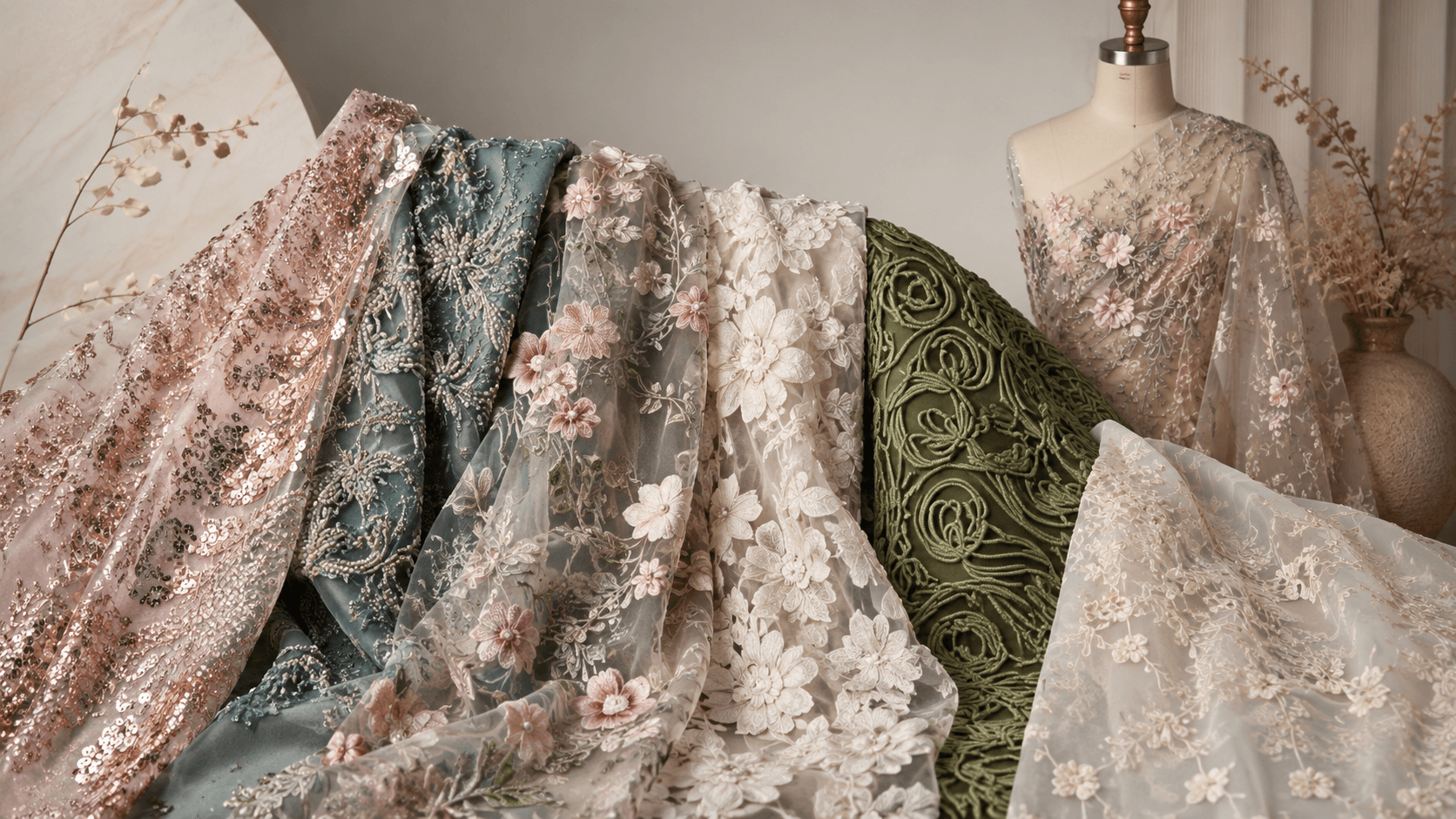
The strongest market opportunities now come from embroidery fabrics that combine design value with wearability. Lightweight all-over embroidery, sequin embroidery fabric, beaded embroidery, appliqué embroidery fabric, cord embroidery fabric, water soluble embroidery lace, and mixed-technique embroidery are all being used to create more distinctive fashion fabrics for different price levels and garment categories.
Key Trends Shaping Embroidery Fabric Applications
One of the clearest changes in the embroidery fabric market is the movement from heavy decoration toward more wearable embroidered textiles. Heavy beading and dense embellishment still remain important for bridalwear, couture-inspired garments, and evening dresses, but many fashion buyers now also need lighter embroidery fabrics that can work in ready-to-wear collections.
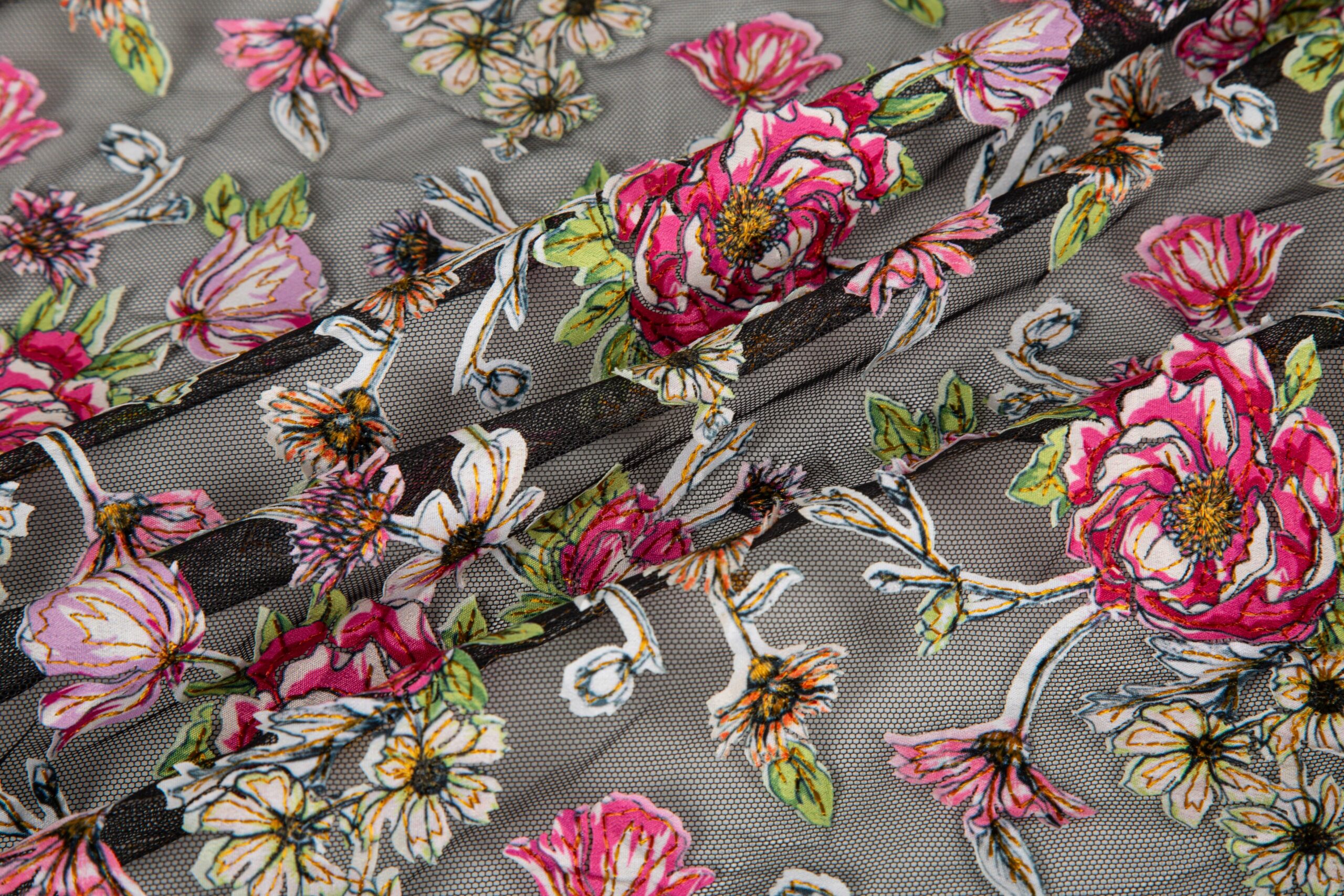
Lightweight mesh embroidery, cotton eyelet embroidery, soft all-over embroidery, water soluble embroidery lace, and delicate floral embroidery are becoming more relevant for dresses, blouses, resortwear, kaftans, and summer fashion. These fabrics allow brands to use embroidery as a surface design feature without making the final garment too heavy or difficult to produce.
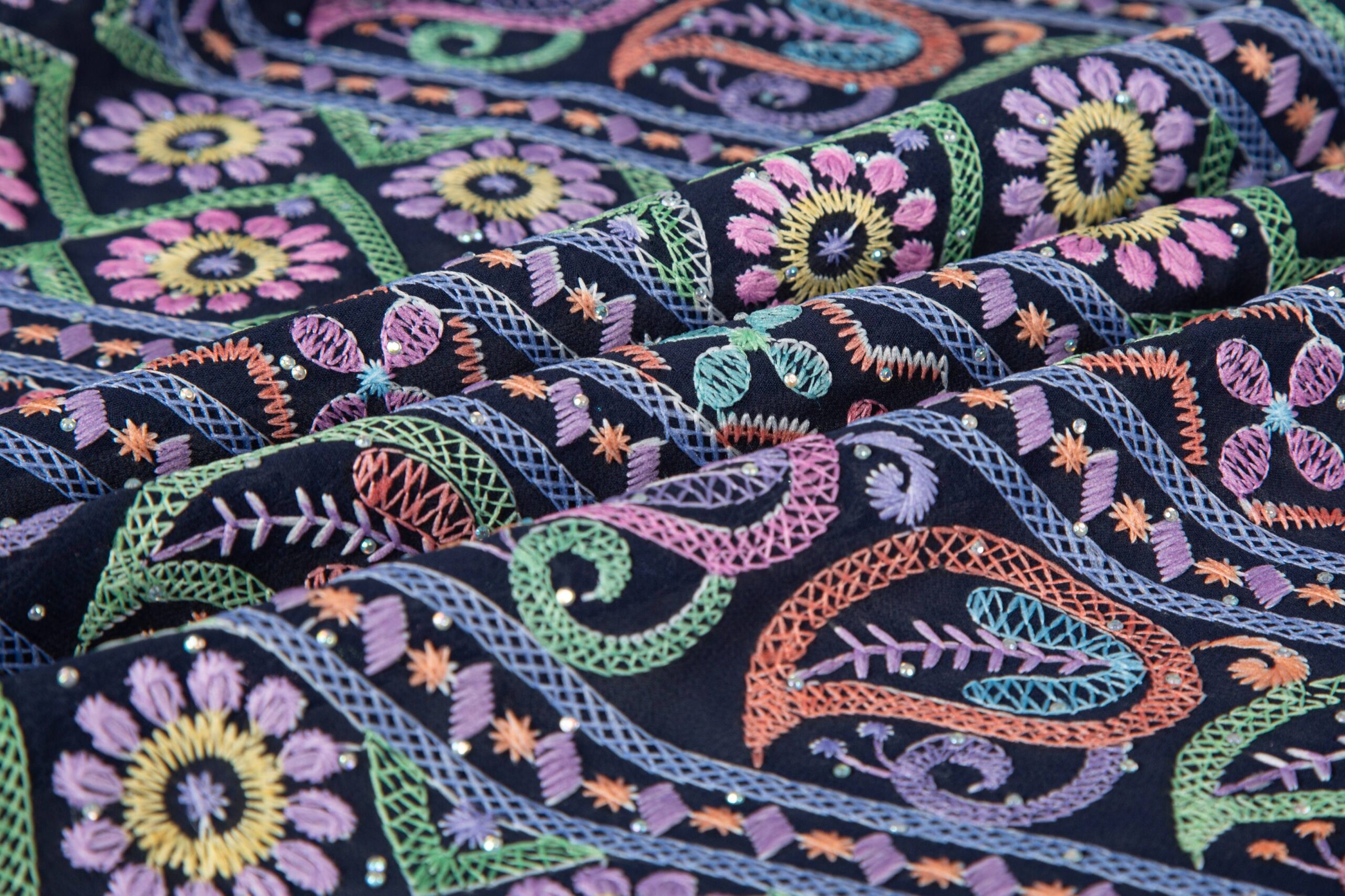
At the same time, mixed embroidery techniques are becoming more competitive. Sequin embroidery fabric, beaded embroidery, cord embroidery fabric, metallic thread embroidery, appliqué embroidery fabric, 3D tape embroidery, and rhinestone embellishment can be combined to create stronger visual identity. The market is no longer only asking for more decoration; it is asking for the right balance between texture, weight, price, hand feel, and final garment use. For a broader view of available techniques, buyers can also explore our embroidered fabric projects.
wearable embroidery
Lighter embroidery fabrics are gaining value for dresses, blouses, kaftans, and ready-to-wear fashion.
mixed techniques
Combining sequins, beads, cords, appliqué, metallic yarns, and 3D effects creates stronger product identity.
Where Embroidery Fabric Performs Best
Embroidery fabric performs especially well in fashion categories where surface texture, decorative detail, and visual value matter. Bridalwear and occasionwear often use beaded embroidery, water soluble embroidery lace, delicate mesh embroidery, and 3D floral surfaces to create refined and ceremonial effects. Evening dresses and partywear rely on sequin embroidery fabric, metallic thread embroidery, rhinestone details, and beaded mesh to create stronger light reflection and stage presence.
Abayas, kaftans, and modest fashion collections often use cord embroidery fabric, border embroidery, all-over embroidery, and placement embroidery to create elegant decorative structures. Casual womenswear and summer dresses are moving toward lighter embroidery surfaces such as cotton eyelet embroidery, small floral embroidery, and breathable embroidered fabrics. Outerwear and structured fashion can use appliqué embroidery fabric, 3D tape embroidery, cord embroidery, and raised embroidery to build stronger shape and artistic expression.
For embroidery fabric suppliers, the market challenge is not only producing more complex patterns. The real challenge is helping clients match embroidery density, base fabric, decoration method, weight, hand feel, and final garment application. Manufacturers that can support artwork adjustment, sample development, mixed-technique embroidery, and bulk quality control are better positioned to serve modern fashion brands through reliable custom embroidery services.
about
Zenithfabrics
Based in Keqiao, Shaoxing — the heart of China's textile industry — Zenithfabrics specializes in high-quality embroidered mesh, embroidery lace, and custom decorative fabrics.