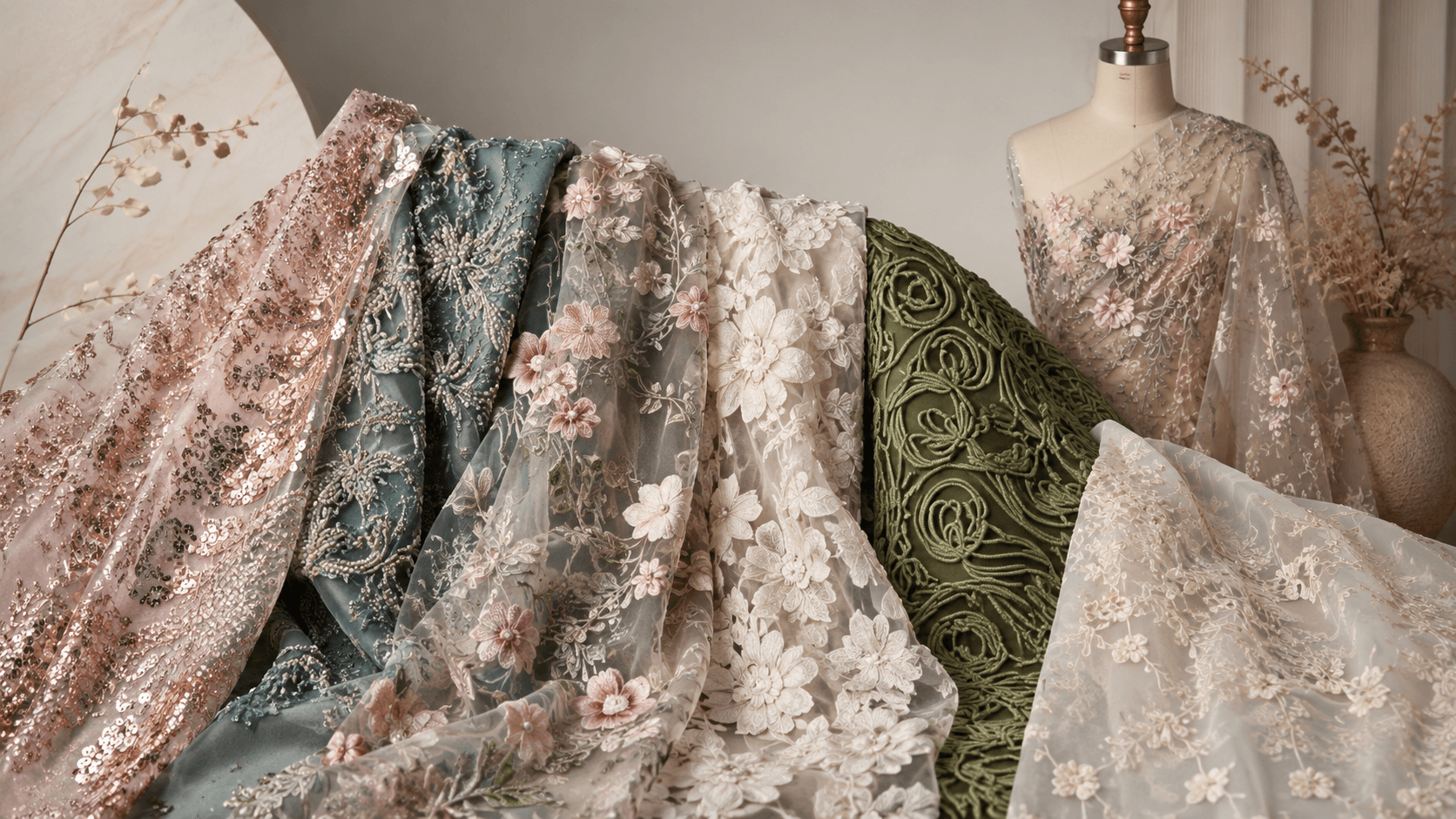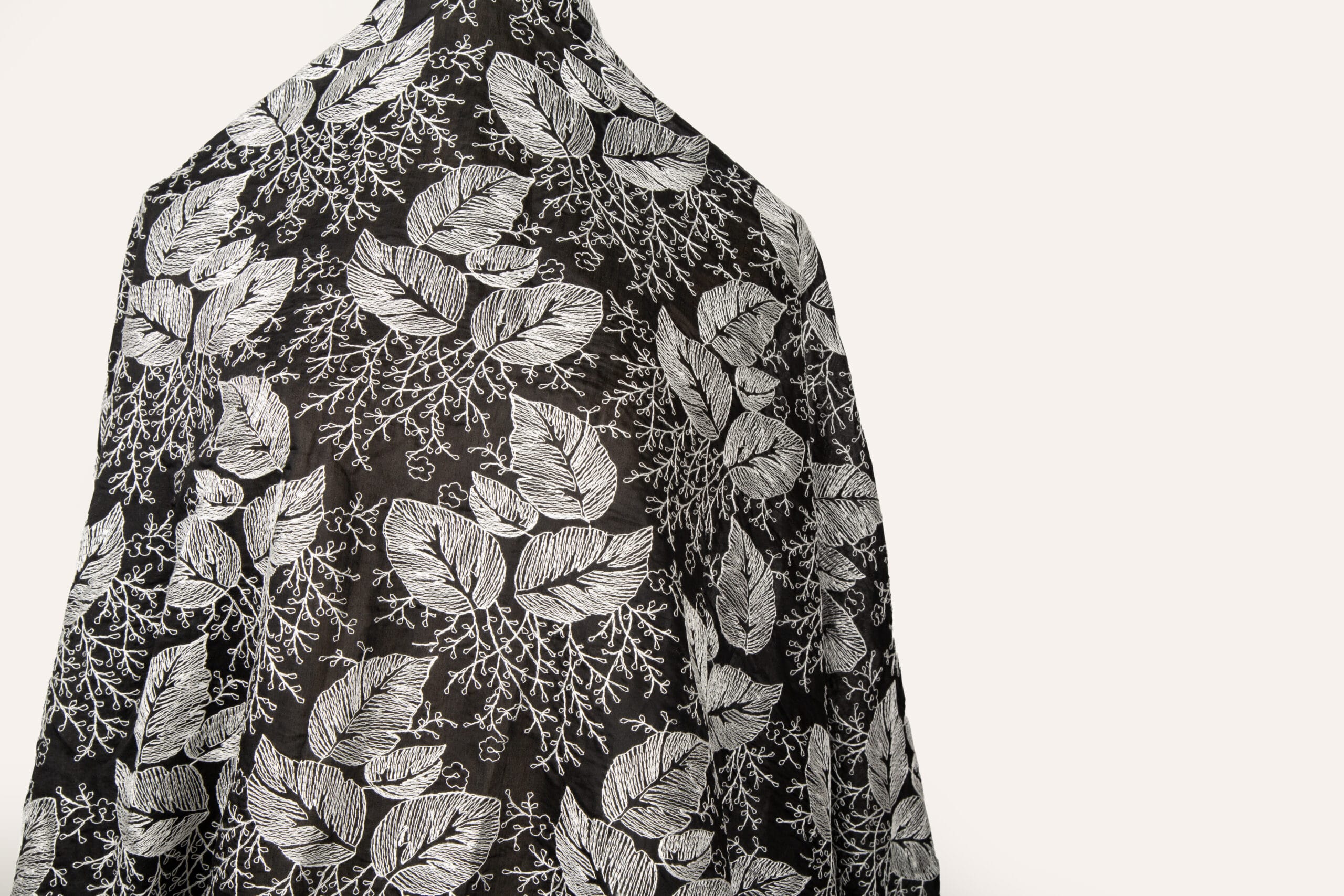
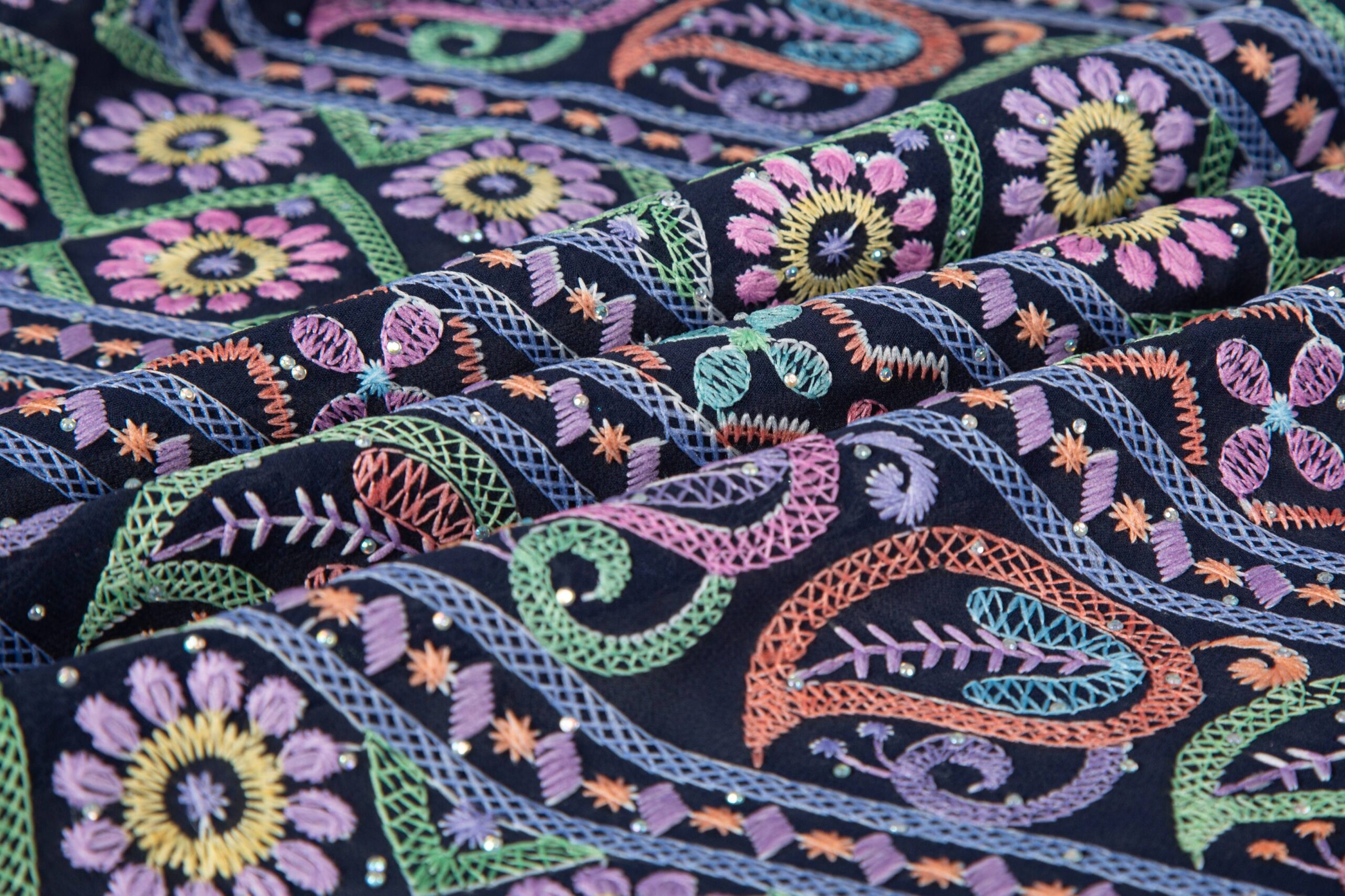
All over embroidery fabric is a decorative textile created by covering the full fabric surface with continuous embroidery patterns. Instead of placing embroidery only in selected areas, all over embroidery repeats across the entire fabric width or yardage, creating a fully decorated surface for fashion garments.
Also called fully embroidered fabric or allover embroidered fabric, this type of fabric is widely used in dresses, blouses, skirts, eveningwear, bridalwear, kaftans, occasionwear, and custom fashion collections. Depending on the design, it may feature floral embroidery, geometric patterns, multi-color threadwork, border repeats, paisley motifs, sequins, beads, or rhinestone details.
For fashion brands, garment manufacturers, and fabric wholesalers, all over embroidery fabric is valuable because it provides strong visual impact, repeatable pattern coverage, and a more finished decorative surface than plain fabric or partial embroidery. This guide explains what all over embroidery fabric is, how it differs from partial embroidery, how it is made, and how to source custom all over embroidery fabric for fashion production.
What Is All Over Embroidery Fabric?
All over embroidery fabric refers to fabric where embroidery patterns are applied across the whole surface rather than only on a specific placement area. The embroidery may repeat continuously across the fabric width, forming a full-coverage decorative pattern suitable for garment cutting and production.
In simple terms, all over embroidery means the fabric itself becomes a decorative embroidered textile. The design is not limited to a single motif, border, neckline, or patch. Instead, the embroidery covers the material in a repeat pattern, giving designers more flexibility when cutting panels, sleeves, bodices, skirts, or other garment parts.
This is why buyers may also search for terms such as fully embroidered fabric, allover embroidered fabric, full embroidery fabric, or all over embroidered fabric by the yard. These terms usually point to the same general product category: embroidery-covered fabric suitable for apparel and fashion use.
All over embroidery can be produced on different base fabrics, including mesh, tulle, cotton, polyester, georgette, satin, organza, or blended fabrics. The final effect depends on the base fabric, embroidery density, thread color, motif scale, stitch type, and any additional embellishments.
All Over Embroidery vs Partial Embroidery: What Is the Difference?
The main difference between all over embroidery and partial embroidery is coverage. All over embroidery covers the fabric continuously, while partial embroidery is applied only to selected areas.
Partial embroidery is common for collars, borders, chest motifs, cuffs, garment panels, or placement designs. It is useful when the designer wants decoration in a specific position. All over embroidery fabric is different because the embroidered pattern continues across the yardage, allowing the fabric to be used more freely in garment production.
| Comparison | All Over Embroidery Fabric | Partial Embroidery |
|---|---|---|
| Coverage | Embroidery covers the full fabric surface | Embroidery appears only in selected areas |
| Pattern style | Continuous repeat pattern or full-surface layout | Placement motif, border, patch, or panel design |
| Garment cutting | Flexible for dresses, tops, skirts, and panels | Requires more precise placement during cutting |
| Visual effect | Rich, decorative, and fully finished textile surface | Focused decoration in specific design areas |
| Best for | Fashion fabrics, dresses, wholesale yardage, custom collections | Localized garment decoration and special placement designs |
For buyers looking for all over embroidery fabric wholesale, full-surface coverage is usually important because it allows the fabric to be sold or cut by the yard without depending on one fixed motif position.
How All Over Embroidery Fabric Is Made
All over embroidery fabric is made by stitching repeated embroidery patterns across a base fabric. The process starts with design development and embroidery digitizing. The artwork must be adjusted into a repeatable pattern that can run across the fabric width while maintaining consistent spacing, stitch density, and visual balance.
This type of fabric may be produced with computerized embroidery machines, multi-head embroidery machines, or, in some cases, schiffli embroidery equipment. However, schiffli embroidery fabric is only one possible production method. All over embroidery is a broader fabric category and can be produced with different machine systems depending on the pattern, fabric base, and order requirements.
- 1
Artwork development — The embroidery design is created according to motif style, repeat direction, color plan, garment use, and fabric width.
- 2
Embroidery digitizing — The artwork is converted into a machine-readable embroidery file. Stitch direction, density, sequence, and thread changes are planned.
- 3
Base fabric preparation — The fabric is selected and prepared according to weight, stretch, stability, transparency, and garment application.
- 4
Machine embroidery production — The embroidery pattern is stitched across the fabric surface using programmed repeat settings.
- 5
Additional embellishment — Depending on the design, sequins, beads, cords, metallic threads, or rhinestones may be added for decorative effect.
- 6
Inspection and finishing — The finished fabric is checked for thread breaks, skipped stitches, color accuracy, repeat consistency, and surface defects.
Because all over embroidery covers a large fabric area, production control is very important. Stitch density must be balanced so the fabric remains decorative without becoming too stiff, heavy, or difficult to sew.
Common Types of All Over Embroidery Fabric
There are many types of embroidery fabric used in fashion development. All over embroidery can be designed in different styles depending on the target garment, market, price level, and visual direction.
| Type | Best For | Visual Effect |
|---|---|---|
| Floral All Over Embroidery Fabric | Dresses, bridalwear, blouses, feminine fashion | Soft, decorative, romantic, and versatile |
| Geometric Embroidered Fabric | Modern fashion, statement garments, accessories | Structured, graphic, and contemporary |
| Multi-Color Embroidered Fabric | Fashion collections, dresses, kaftans, resortwear | Rich color contrast and expressive surface detail |
| All Over Embroidery on Mesh or Tulle | Sheer garments, overlays, eveningwear, bridal fabrics | Lightweight, transparent, and decorative |
| Fully Embroidered Cotton or Polyester Fabric | Blouses, casual fashion, shirts, skirts | Stable, wearable, and suitable for daily garments |
| All Over Embroidery with Sequins or Beads | Evening gowns, partywear, luxury garments | Sparkle, texture, and premium embellishment |
| Hotfix Rhinestone Embroidered Fabric | Occasionwear, dresses, performance wear, statement fashion | Light reflection, decorative shine, and luxury surface detail |
For more complex decorative surfaces, all over embroidery can also be combined with sequin embroidery fabric, beaded embroidery, cord embroidery fabric, or appliqué embroidery fabric.
All Over Embroidery Fabric with Rhinestones and Decorative Details
Some all over embroidery fabrics are developed with extra decorative details such as sequins, beads, metallic threads, cords, or rhinestones. These additions can enhance the fabric surface and make the design more suitable for eveningwear, stage garments, festive fashion, and premium occasionwear.
An embroidered fabric with rhinestones can create a more eye-catching surface because the stones reflect light while the embroidery provides pattern, texture, and color. Hotfix rhinestone embroidered fabric is often used when designers want decorative shine without covering the whole fabric with sequins.
This type of fabric works especially well when embroidery patterns are already rich and continuous. The rhinestones can be placed selectively along motifs, lines, floral centers, or geometric details to highlight the design without making the fabric too heavy.
Best Applications for Fully Embroidered Fabric
Fully embroidered fabric is used in fashion categories where the fabric itself needs to carry strong decorative value. Because the embroidery covers the full surface, it can create garments with a complete visual identity even when the garment shape is simple.
| Application | Why It Works |
|---|---|
| Dresses | Creates a complete decorative surface for fashion and occasion garments |
| Blouses and tops | Adds texture and pattern without requiring extra garment decoration |
| Skirts | Works well for repeat patterns, border layouts, and flowing silhouettes |
| Eveningwear | Provides richness, light reflection, and premium visual impact |
| Bridalwear | Can create refined floral or lace-like embroidery effects |
| Kaftans and resortwear | Supports colorful, decorative, and full-surface pattern designs |
| Custom collections | Allows brands to develop exclusive embroidery patterns and colorways |
For bridalwear and eveningwear, all over embroidery fabric can be combined with sequins, beads, pearls, or rhinestones to create a more luxurious appearance. For everyday fashion, lighter embroidery density and softer base fabrics may be used to keep the garment comfortable and easy to sew.
For lace-like or openwork effects, buyers may also consider water soluble embroidery lace, which uses a different production method but can serve similar decorative fashion markets.
How to Source Custom All Over Embroidery Fabric
When sourcing custom all over embroidery fabric, buyers should consider both design appearance and production feasibility. A beautiful pattern must also work in repeat, maintain stable embroidery quality, and remain suitable for garment cutting, sewing, and finishing.
Before starting a custom all over embroidery fabric project, it is useful to confirm the following details:
- Base fabric type and fabric width
- Embroidery artwork or reference design
- Repeat size and pattern direction
- Thread colors and stitch density
- Whether the fabric needs sequins, beads, cords, metallic threads, or rhinestones
- Target garment category and end market
- Sampling requirements and bulk production standards
For buyers searching for an all over embroidery fabric supplier or fully embroidered fabric manufacturer, production experience is important. The supplier should be able to review artwork, adjust stitch density, test the base fabric, produce samples, and maintain consistency during bulk production.
Zenithfabrics provides custom embroidery services for fashion brands, garment manufacturers, and fabric wholesalers, supporting design review, sampling, and bulk all over embroidery fabric production.
Custom All Over Embroidery Fabric Manufacturer
As a custom embroidery fabric manufacturer, Zenithfabrics develops all over embroidery fabric, fully embroidered fabric, embroidered mesh fabric, rhinestone embroidered fabric, and mixed-technique decorative fabrics for fashion brands and wholesalers.
Our embroidery development can support floral patterns, geometric motifs, multi-color embroidery, full-surface repeat designs, hotfix rhinestone details, sequin embroidery, beaded embroidery, cord embroidery, and other custom decorative effects.
You can explore our embroidered fabric projects to see different embroidery techniques used for fashion fabric development, or contact us through our contact page to discuss custom all over embroidery fabric for your next collection.
Custom Pattern Development
Support for artwork review, repeat pattern planning, embroidery digitizing, sample development, and custom all over embroidery fabric design.
Bulk Embroidery Production
Consistent fully embroidered fabric production for fashion brands, garment manufacturers, fabric wholesalers, and custom apparel projects.
All Over Embroidery Fabric for Fashion Brands
Zenithfabrics develops custom all over embroidery fabric and fully embroidered fabric for fashion brands, garment manufacturers, and fabric wholesalers. From artwork development and sample review to bulk embroidery production, we help clients create decorative embroidered textiles suitable for dresses, blouses, eveningwear, bridalwear, kaftans, occasionwear, and custom fashion collections.
about
Zenithfabrics
Based in Keqiao, Shaoxing — the heart of China's textile industry — Zenithfabrics specializes in high-quality embroidered mesh, embroidery lace, and custom decorative fabrics.